Building Production Ready REST APIs in Go: The Complete Gold Standard Guide
You've built APIs before. They work on your machine. They pass your tests. Then they hit production and everything falls apart. Users complain about slow responses. Your logs are a mess. Someone bypasses authentication. The database gets hammered. Sound familiar?
Building an API that works is easy. Building an API that survives production is an entirely different game. This guide will transform you from someone who builds APIs to someone who builds production grade systems that handle millions of requests, recover from failures gracefully, and let you sleep peacefully at night.
Table of Contents
- The Anatomy of a Production API
- Project Structure That Scales
- HTTP Methods: When and Why
- HTTP Status Codes: Speaking the Right Language
- Routing Done Right
- Middleware: The Unsung Heroes
- Request Validation: Trust Nobody
- Error Handling: Failing Gracefully
- Authentication: Who Are You?
- Authorization: What Can You Do?
- Database Patterns for APIs
- Caching Strategies
- Rate Limiting: Protecting Your Service
- Logging: Your Production Lifeline
- Monitoring and Observability
- HATEOAS: Self Documenting APIs
- API Versioning
- Testing Production APIs
- Deployment Considerations
- Complete Working Example
The Anatomy of a Production API
💡 Think of it like this: A production API is like a well run hospital emergency room. Patients (requests) arrive constantly, some critical, some routine. There's a triage system (load balancer), specialized doctors (handlers), medical records (database), security (authentication), visiting hours policy (rate limiting), and detailed charts (logging). Everything works together, and if one system fails, others compensate.
Before we write a single line of code, let's understand what separates a hobby project from a production system.
What Makes an API "Production Ready"?
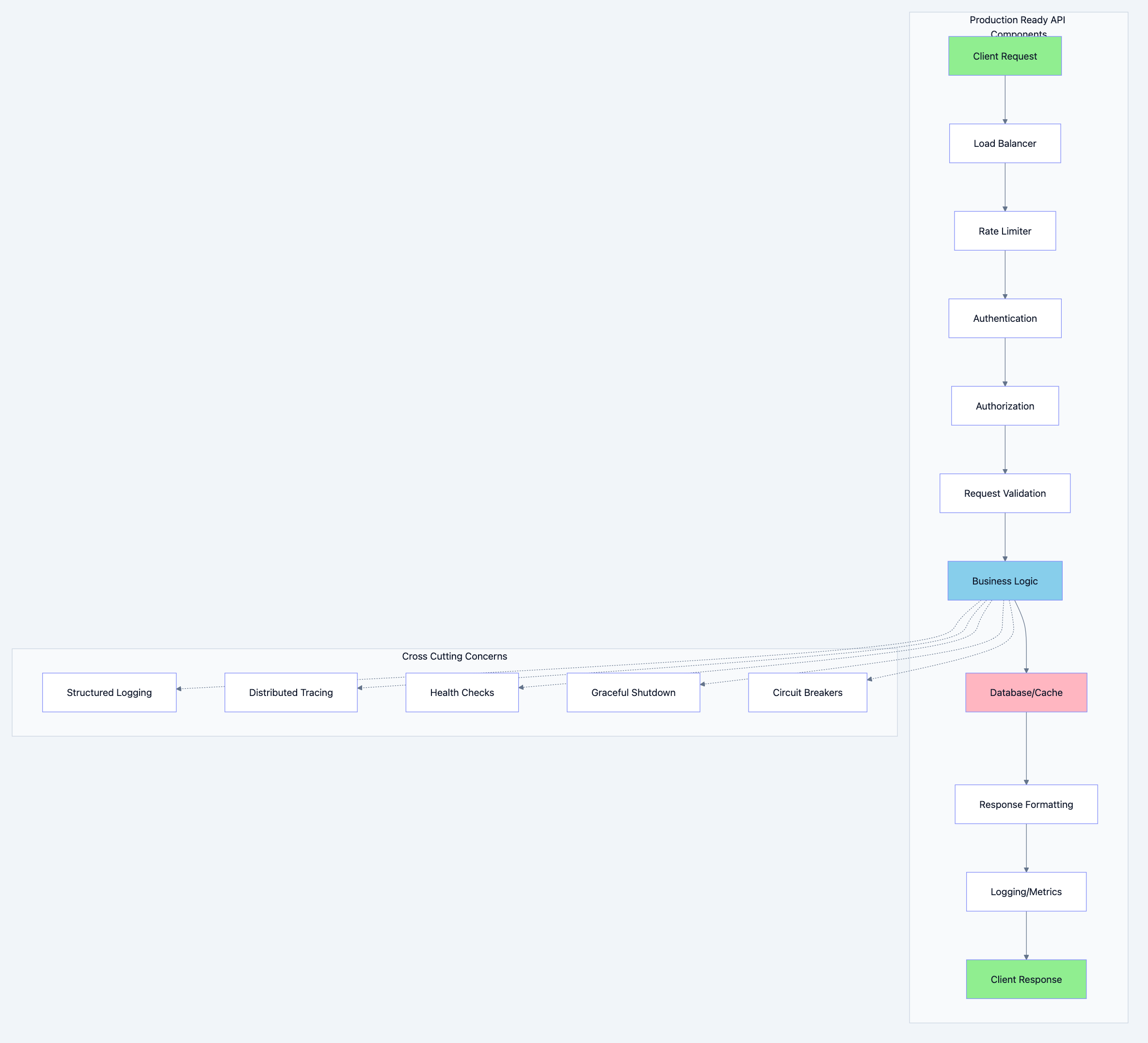
REST API architecture diagram 1
A production API must handle:
| Concern | Why It Matters | Consequence of Ignoring |
|---|---|---|
| High Availability | Users expect 99.9%+ uptime | Lost revenue, angry customers |
| Scalability | Traffic spikes are inevitable | Crashed servers, timeouts |
| Security | Attackers are always probing | Data breaches, lawsuits |
| Observability | You can't fix what you can't see | Blind debugging for hours |
| Resilience | Dependencies fail | Cascading failures |
| Performance | Every millisecond counts | Poor user experience |
Project Structure That Scales
One of the biggest mistakes developers make is treating project structure as an afterthought. A well organized codebase is not just about aesthetics. It's about maintainability, testability, and team productivity.
The Gold Standard: Domain Driven Structure
myapi/
├── cmd/
│   └── api/
│       └── main.go                 # Application entry point
├── internal/
│   ├── config/
│   │   └── config.go               # Configuration management
│   ├── domain/
│   │   ├── user/
│   │   │   ├── entity.go           # User domain entity
│   │   │   ├── repository.go       # Repository interface
│   │   │   └── service.go          # Business logic
│   │   └── order/
│   │       ├── entity.go
│   │       ├── repository.go
│   │       └── service.go
│   ├── handler/
│   │   ├── user_handler.go         # HTTP handlers for users
│   │   ├── order_handler.go
│   │   └── health_handler.go
│   ├── middleware/
│   │   ├── auth.go                 # Authentication middleware
│   │   ├── logging.go              # Request logging
│   │   ├── ratelimit.go            # Rate limiting
│   │   ├── recovery.go             # Panic recovery
│   │   └── cors.go                 # CORS handling
│   ├── repository/
│   │   ├── postgres/
│   │   │   ├── user_repo.go        # PostgreSQL implementation
│   │   │   └── order_repo.go
│   │   └── redis/
│   │       └── cache.go            # Redis cache implementation
│   ├── router/
│   │   └── router.go               # Route definitions
│   └── pkg/
│       ├── validator/
│       │   └── validator.go        # Request validation
│       ├── response/
│       │   └── response.go         # Standardized responses
│       ├── errors/
│       │   └── errors.go           # Custom error types
│       └── logger/
│           └── logger.go           # Structured logging
├── migrations/
│   ├── 001_create_users.up.sql
│   └── 001_create_users.down.sql
├── api/
│   └── openapi.yaml                # API specification
├── scripts/
│   └── setup.sh                    # Development scripts
├── Dockerfile
├── docker-compose.yml
├── Makefile
├── go.mod
└── go.sum
Why This Structure?
1.
cmd/ directory: Contains application entry points. If you have multiple binaries (API server, worker, CLI), each gets its own subdirectory.2.
internal/ directory: Go's special directory. Code here cannot be imported by external packages. This enforces encapsulation at the package level.3. Domain driven packages: Each business domain (user, order, product) is self contained. This makes it easy to understand, test, and eventually extract into microservices if needed.
4. Separation of concerns:
entity.go: Pure data structures, no dependenciesrepository.go: Interface defining data access contractsservice.go: Business logic, depends on repository interface (not implementation)
5.
handler/ vs domain/: Handlers deal with HTTP concerns (parsing requests, formatting responses). Domain services deal with business logic. Never mix them.Let's see this in code:
// Filename: internal/domain/user/entity.go package user import ( "time" ) // User represents a user in our system // Why: This is a pure domain entity with no external dependencies. // It represents the core business concept of a "user" and can be used // across all layers without importing HTTP or database packages. type User struct { ID string `json:"id"` Email string `json:"email"` Name string `json:"name"` Role Role `json:"role"` CreatedAt time.Time `json:"created_at"` UpdatedAt time.Time `json:"updated_at"` } // Role represents user roles in the system // Why: Using a custom type instead of string provides type safety // and prevents invalid role assignments at compile time. type Role string const ( RoleAdmin Role = "admin" RoleUser Role = "user" RoleGuest Role = "guest" ) // IsValid checks if the role is a valid system role // Why: Validation at the domain level ensures business rules // are enforced regardless of how the data enters the system. func (r Role) IsValid() bool { switch r { case RoleAdmin, RoleUser, RoleGuest: return true default: return false } }
HTTP Methods: When and Why
HTTP methods are not just conventions. They carry semantic meaning that clients, caches, and proxies rely on. Using them correctly makes your API predictable and cacheable.
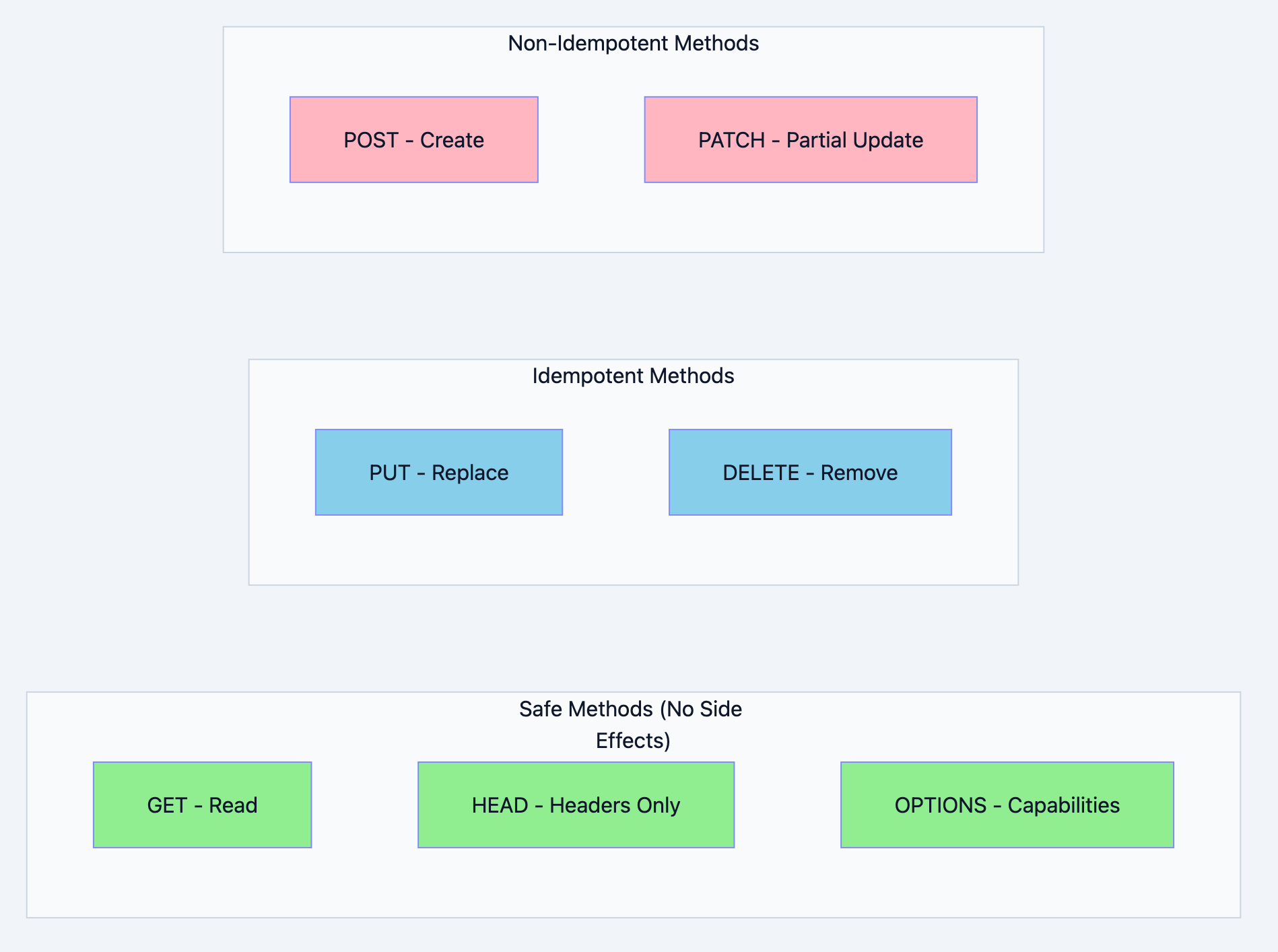
REST API architecture diagram 2
The Complete HTTP Methods Guide
| Method | Purpose | Idempotent | Safe | Cacheable | Request Body |
|---|---|---|---|---|---|
| GET | Retrieve resource | Yes | Yes | Yes | No |
| POST | Create resource | No | No | Rarely | Yes |
| PUT | Replace resource | Yes | No | No | Yes |
| PATCH | Partial update | No | No | No | Yes |
| DELETE | Remove resource | Yes | No | No | Optional |
| HEAD | Get headers only | Yes | Yes | Yes | No |
| OPTIONS | Get capabilities | Yes | Yes | No | No |
Understanding Idempotency
💡 Think of it like this: Pressing an elevator button once or ten times has the same effect. The elevator comes. That's idempotency. But putting a letter in a mailbox is not idempotent. Each letter you put in is a new letter.
Idempotent means making the same request multiple times produces the same result. This is crucial for:
- Retry logic (network failures)
- Caching
- Distributed systems
go// Filename: internal/handler/user_handler.go
package handler

import (
    "encoding/json"
    "net/http"

    "myapi/internal/domain/user"
    "myapi/internal/pkg/response"
)

type UserHandler struct {
    service *user.Service
}

func NewUserHandler(service *user.Service) *UserHandler {
    return &UserHandler{service: service}
}

// GET /users/{id}
// Why GET: We're retrieving data without modifying anything.
// GET is safe (no side effects) and cacheable.
func (h *UserHandler) GetUser(w http.ResponseWriter, r *http.Request) {
    // Why: Extract ID from URL path
    id := r.PathValue("id") // Go 1.22+ built-in routing

    user, err := h.service.GetUser(r.Context(), id)
    if err != nil {
        response.Error(w, http.StatusNotFound, "User not found")
        return
    }

    response.JSON(w, http.StatusOK, user)
}

// POST /users
// Why POST: We're creating a new resource. Each request creates
// a new user, so it's not idempotent. POST is the correct choice.
func (h *UserHandler) CreateUser(w http.ResponseWriter, r *http.Request) {
    var req CreateUserRequest
    if err := json.NewDecoder(r.Body).Decode(&req); err != nil {
        response.Error(w, http.StatusBadRequest, "Invalid request body")
        return
    }

    // Why: Service layer handles business logic
    user, err := h.service.CreateUser(
        r.Context(),
        req.Email,
        req.Name,
        user.Role(req.Role),
    )
    if err != nil {
        response.Error(w, http.StatusBadRequest, err.Error())
        return
    }

    // Why 201: Resource was created. Include Location header
    // pointing to the new resource.
    w.Header().Set("Location", "/users/"+user.ID)
    response.JSON(w, http.StatusCreated, user)
}

// PUT /users/{id}
// Why PUT: We're replacing the entire resource. PUT is idempotent.
// Making the same PUT request multiple times results in the same state.
func (h *UserHandler) ReplaceUser(w http.ResponseWriter, r *http.Request) {
    id := r.PathValue("id")

    var req ReplaceUserRequest
    if err := json.NewDecoder(r.Body).Decode(&req); err != nil {
        response.Error(w, http.StatusBadRequest, "Invalid request body")
        return
    }

    // Why: PUT replaces the entire resource, so all fields are required
    user, err := h.service.ReplaceUser(r.Context(), id, req.Email, req.Name, user.Role(req.Role))
    if err != nil {
        response.Error(w, http.StatusBadRequest, err.Error())
        return
    }

    response.JSON(w, http.StatusOK, user)
}

// PATCH /users/{id}
// Why PATCH: We're making a partial update. Only the fields
// provided in the request will be updated.
func (h *UserHandler) UpdateUser(w http.ResponseWriter, r *http.Request) {
    id := r.PathValue("id")

    var req UpdateUserRequest
    if err := json.NewDecoder(r.Body).Decode(&req); err != nil {
        response.Error(w, http.StatusBadRequest, "Invalid request body")
        return
    }

    // Why: PATCH allows partial updates
    user, err := h.service.UpdateUser(r.Context(), id, req.Name, user.Role(req.Role))
    if err != nil {
        response.Error(w, http.StatusBadRequest, err.Error())
        return
    }

    response.JSON(w, http.StatusOK, user)
}

// DELETE /users/{id}
// Why DELETE: We're removing a resource. DELETE is idempotent.
// Deleting the same resource twice results in the same state (deleted).
func (h *UserHandler) DeleteUser(w http.ResponseWriter, r *http.Request) {
    id := r.PathValue("id")

    if err := h.service.DeleteUser(r.Context(), id); err != nil {
        response.Error(w, http.StatusNotFound, "User not found")
        return
    }

    // Why 204: Successful deletion with no content to return
    w.WriteHeader(http.StatusNoContent)
}

// Request DTOs
type CreateUserRequest struct {
    Email string `json:"email"`
    Name  string `json:"name"`
    Role  string `json:"role"`
}

type ReplaceUserRequest struct {
    Email string `json:"email"`
    Name  string `json:"name"`
    Role  string `json:"role"`
}

type UpdateUserRequest struct {
    Name string `json:"name,omitempty"`
    Role string `json:"role,omitempty"`
}
PUT vs PATCH: The Critical Difference
This confuses many developers. Here's the definitive answer:
PUT = "Here's the complete new version of this resource"
jsonPUT /users/123
{
    "email": "new@example.com",
    "name": "New Name",
    "role": "admin"
}
If you omit a field, it should be set to null or default.
PATCH = "Here are the fields I want to change"
jsonPATCH /users/123
{
    "name": "New Name"
}
Only the name changes. Email and role stay the same.
When to Use POST for Actions
Sometimes you need to perform actions that don't fit CRUD operations:
POST /users/123/suspend      # Suspend a user
POST /orders/456/cancel      # Cancel an order
POST /payments/process       # Process payment
POST /reports/generate       # Generate a report
Why POST for actions?
- They're not idempotent (suspending twice might have different effects)
- They don't map cleanly to resource creation/modification
- They often trigger side effects (emails, notifications)
HTTP Status Codes: Speaking the Right Language
Status codes tell clients what happened without parsing the response body. Using them correctly enables proper error handling on the client side.
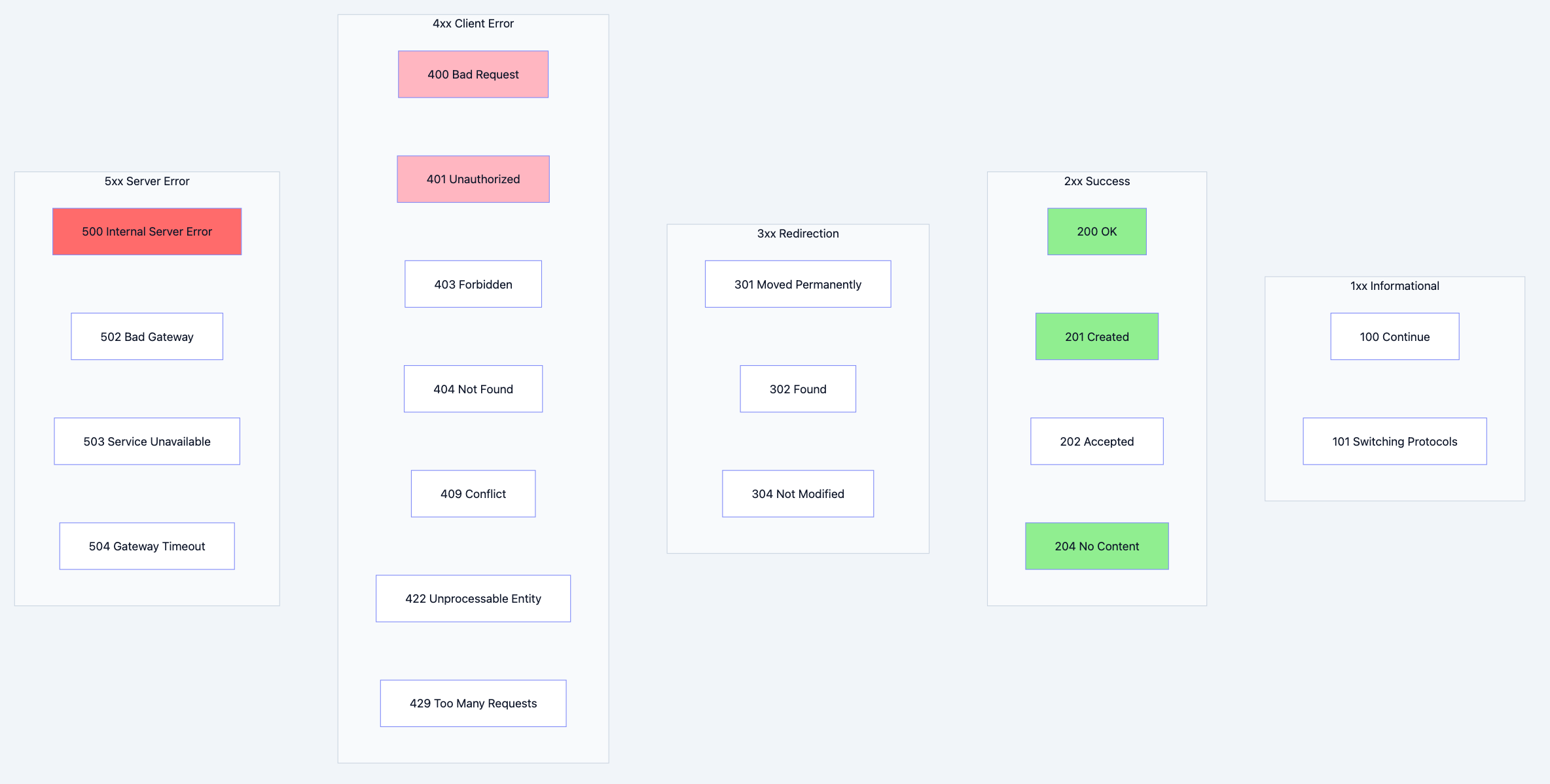
REST API architecture diagram 3
The Complete Status Code Guide for APIs
Success Codes (2xx)
| Code | Name | When to Use | Example |
|---|---|---|---|
| 200 | OK | Request succeeded, returning data | GET /users/123 |
| 201 | Created | Resource created | POST /users |
| 202 | Accepted | Request accepted, processing async | POST /reports/generate |
| 204 | No Content | Success, nothing to return | DELETE /users/123 |
Client Error Codes (4xx)
| Code | Name | When to Use | Example |
|---|---|---|---|
| 400 | Bad Request | Malformed request syntax | Invalid JSON |
| 401 | Unauthorized | Missing/invalid authentication | No token provided |
| 403 | Forbidden | Authenticated but not authorized | User accessing admin route |
| 404 | Not Found | Resource doesn't exist | GET /users/nonexistent |
| 405 | Method Not Allowed | Wrong HTTP method | POST to GET-only endpoint |
| 409 | Conflict | Resource state conflict | Duplicate email |
| 422 | Unprocessable Entity | Valid syntax, invalid semantics | Email format invalid |
| 429 | Too Many Requests | Rate limit exceeded | More than 100 req/min |
Server Error Codes (5xx)
| Code | Name | When to Use | Example |
|---|---|---|---|
| 500 | Internal Server Error | Unexpected server error | Unhandled exception |
| 502 | Bad Gateway | Upstream service failed | Database unreachable |
| 503 | Service Unavailable | Server overloaded/maintenance | Shutting down |
| 504 | Gateway Timeout | Upstream service timeout | Slow database query |
400 vs 422: The Subtle Difference
400 Bad Request: The request is syntactically incorrect
- Malformed JSON
- Missing required headers
- Invalid content type
422 Unprocessable Entity: The request is syntactically correct but semantically invalid
- Email format is invalid
- Password too short
- Date in the past when future required
go// Filename: internal/pkg/response/response.go
package response

import (
    "encoding/json"
    "net/http"
)

// APIResponse is the standard response wrapper
// Why: Consistent response format makes client implementation easier
// and allows for metadata like pagination info.
type APIResponse struct {
    Success bool        `json:"success"`
    Data    interface{} `json:"data,omitempty"`
    Error   *APIError   `json:"error,omitempty"`
    Meta    *Meta       `json:"meta,omitempty"`
}

// APIError represents an error response
// Why: Structured errors allow clients to handle errors programmatically
type APIError struct {
    Code    string            `json:"code"`              // Machine-readable code
    Message string            `json:"message"`           // Human-readable message
    Details map[string]string `json:"details,omitempty"` // Field-level errors
}

// Meta contains response metadata
type Meta struct {
    Page       int `json:"page,omitempty"`
    PageSize   int `json:"page_size,omitempty"`
    TotalItems int `json:"total_items,omitempty"`
    TotalPages int `json:"total_pages,omitempty"`
}

// JSON sends a successful JSON response
// Why: Centralizing response handling ensures consistent Content-Type
// headers and JSON encoding across all handlers.
func JSON(w http.ResponseWriter, status int, data interface{}) {
    w.Header().Set("Content-Type", "application/json")
    w.WriteHeader(status)

    resp := APIResponse{
        Success: true,
        Data:    data,
    }

    json.NewEncoder(w).Encode(resp)
}

// JSONWithMeta sends a JSON response with metadata
// Why: Useful for paginated responses
func JSONWithMeta(w http.ResponseWriter, status int, data interface{}, meta *Meta) {
    w.Header().Set("Content-Type", "application/json")
    w.WriteHeader(status)

    resp := APIResponse{
        Success: true,
        Data:    data,
        Meta:    meta,
    }

    json.NewEncoder(w).Encode(resp)
}

// Error sends an error response
// Why: Consistent error format helps clients handle errors uniformly
func Error(w http.ResponseWriter, status int, message string) {
    w.Header().Set("Content-Type", "application/json")
    w.WriteHeader(status)

    resp := APIResponse{
        Success: false,
        Error: &APIError{
            Code:    httpStatusToCode(status),
            Message: message,
        },
    }

    json.NewEncoder(w).Encode(resp)
}

// ValidationError sends a 422 with field-level errors
// Why: Helps clients display errors next to form fields
func ValidationError(w http.ResponseWriter, errors map[string]string) {
    w.Header().Set("Content-Type", "application/json")
    w.WriteHeader(http.StatusUnprocessableEntity)

    resp := APIResponse{
        Success: false,
        Error: &APIError{
            Code:    "VALIDATION_ERROR",
            Message: "Validation failed",
            Details: errors,
        },
    }

    json.NewEncoder(w).Encode(resp)
}

// httpStatusToCode converts HTTP status to error code
// Why: Machine-readable codes are easier to handle than status numbers
func httpStatusToCode(status int) string {
    codes := map[int]string{
        400: "BAD_REQUEST",
        401: "UNAUTHORIZED",
        403: "FORBIDDEN",
        404: "NOT_FOUND",
        409: "CONFLICT",
        422: "VALIDATION_ERROR",
        429: "RATE_LIMITED",
        500: "INTERNAL_ERROR",
        502: "BAD_GATEWAY",
        503: "SERVICE_UNAVAILABLE",
    }

    if code, ok := codes[status]; ok {
        return code
    }
    return "UNKNOWN_ERROR"
}
Expected Response Formats:
Success Response:
json{
    "success": true,
    "data": {
        "id": "123",
        "email": "user@example.com",
        "name": "John Doe",
        "role": "user"
    }
}
Paginated Response:
json{
    "success": true,
    "data": [
        {"id": "1", "name": "User 1"},
        {"id": "2", "name": "User 2"}
    ],
    "meta": {
        "page": 1,
        "page_size": 10,
        "total_items": 100,
        "total_pages": 10
    }
}
Error Response:
json{
    "success": false,
    "error": {
        "code": "VALIDATION_ERROR",
        "message": "Validation failed",
        "details": {
            "email": "Invalid email format",
            "password": "Must be at least 8 characters"
        }
    }
}
Routing Done Right
Routing is the backbone of your API. Good URL design makes your API intuitive and self documenting.
RESTful URL Design Principles
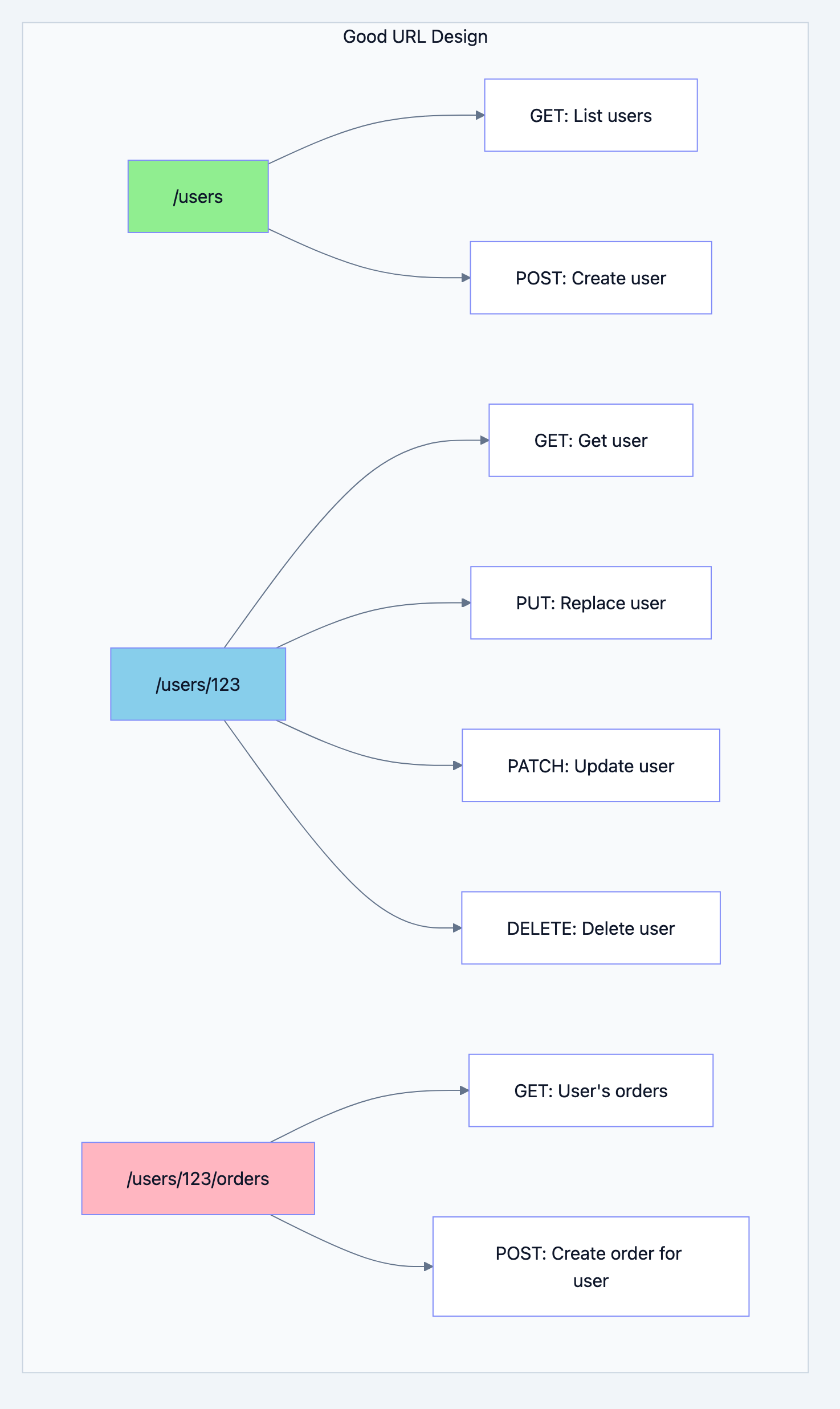
REST API architecture diagram 4
URL Design Rules
1. Use nouns, not verbs
✅ GET  /users          (get all users)
✅ POST /users          (create user)
❌ GET  /getUsers
❌ POST /createUser
2. Use plural nouns
✅ /users
✅ /orders
✅ /products
❌ /user
❌ /order
3. Use hyphens for readability
✅ /user-profiles
✅ /order-items
❌ /user_profiles
❌ /orderItems
4. Nest resources logically
✅ /users/123/orders          (orders belonging to user 123)
✅ /orders/456/items          (items in order 456)
❌ /getUserOrders?userId=123
5. Use query parameters for filtering, sorting, pagination
✅ /users?role=admin&sort=created_at&order=desc&page=2&limit=10
❌ /users/admin/sorted-by-date/page-2
Complete Router Implementation
go// Filename: internal/router/router.go
package router

import (
    "net/http"

    "myapi/internal/handler"
    "myapi/internal/middleware"
)

// Config holds router dependencies
type Config struct {
    UserHandler   *handler.UserHandler
    OrderHandler  *handler.OrderHandler
    HealthHandler *handler.HealthHandler
    AuthMW        *middleware.AuthMiddleware
    RateLimitMW   *middleware.RateLimitMiddleware
    LoggingMW     *middleware.LoggingMiddleware
    RecoveryMW    *middleware.RecoveryMiddleware
    CORSMW        *middleware.CORSMiddleware
}

// New creates and configures the router
// Why: Centralizing route definitions makes the API structure clear
// and ensures consistent middleware application.
func New(cfg Config) http.Handler {
    mux := http.NewServeMux()

    // Health check endpoints (no auth required)
    // Why: Load balancers and orchestrators need to check health
    mux.HandleFunc("GET /health", cfg.HealthHandler.Health)
    mux.HandleFunc("GET /ready", cfg.HealthHandler.Ready)

    // API v1 routes
    // Why: Version prefix allows breaking changes in future versions

    // Public routes (no authentication)
    mux.HandleFunc("POST /api/v1/auth/login", cfg.UserHandler.Login)
    mux.HandleFunc("POST /api/v1/auth/register", cfg.UserHandler.Register)
    mux.HandleFunc("POST /api/v1/auth/refresh", cfg.UserHandler.RefreshToken)

    // Protected routes (authentication required)
    // Why: Using separate handler registration allows middleware chaining
    mux.Handle("GET /api/v1/users",
        cfg.AuthMW.Authenticate(http.HandlerFunc(cfg.UserHandler.ListUsers)))
    mux.Handle("POST /api/v1/users",
        cfg.AuthMW.Authenticate(http.HandlerFunc(cfg.UserHandler.CreateUser)))
    mux.Handle("GET /api/v1/users/{id}",
        cfg.AuthMW.Authenticate(http.HandlerFunc(cfg.UserHandler.GetUser)))
    mux.Handle("PUT /api/v1/users/{id}",
        cfg.AuthMW.Authenticate(http.HandlerFunc(cfg.UserHandler.ReplaceUser)))
    mux.Handle("PATCH /api/v1/users/{id}",
        cfg.AuthMW.Authenticate(http.HandlerFunc(cfg.UserHandler.UpdateUser)))
    mux.Handle("DELETE /api/v1/users/{id}",
        cfg.AuthMW.Authenticate(
            cfg.AuthMW.RequireRole("admin")(
                http.HandlerFunc(cfg.UserHandler.DeleteUser))))

    // Nested resources
    mux.Handle("GET /api/v1/users/{id}/orders",
        cfg.AuthMW.Authenticate(http.HandlerFunc(cfg.OrderHandler.GetUserOrders)))
    mux.Handle("POST /api/v1/users/{id}/orders",
        cfg.AuthMW.Authenticate(http.HandlerFunc(cfg.OrderHandler.CreateOrder)))

    // Order routes
    mux.Handle("GET /api/v1/orders",
        cfg.AuthMW.Authenticate(http.HandlerFunc(cfg.OrderHandler.ListOrders)))
    mux.Handle("GET /api/v1/orders/{id}",
        cfg.AuthMW.Authenticate(http.HandlerFunc(cfg.OrderHandler.GetOrder)))
    mux.Handle("POST /api/v1/orders/{id}/cancel",
        cfg.AuthMW.Authenticate(http.HandlerFunc(cfg.OrderHandler.CancelOrder)))

    // Apply global middleware chain
    // Why: Middleware order matters!
    // 1. Recovery: Catch panics first (outermost)
    // 2. CORS: Handle preflight before other processing
    // 3. Logging: Log all requests
    // 4. RateLimit: Protect before expensive operations
    var handler http.Handler = mux
    handler = cfg.RateLimitMW.Limit(handler)
    handler = cfg.LoggingMW.Log(handler)
    handler = cfg.CORSMW.Handle(handler)
    handler = cfg.RecoveryMW.Recover(handler)

    return handler
}
Middleware: The Unsung Heroes
Middleware is code that runs before and/or after your handlers. It's perfect for cross cutting concerns like logging, authentication, and rate limiting.
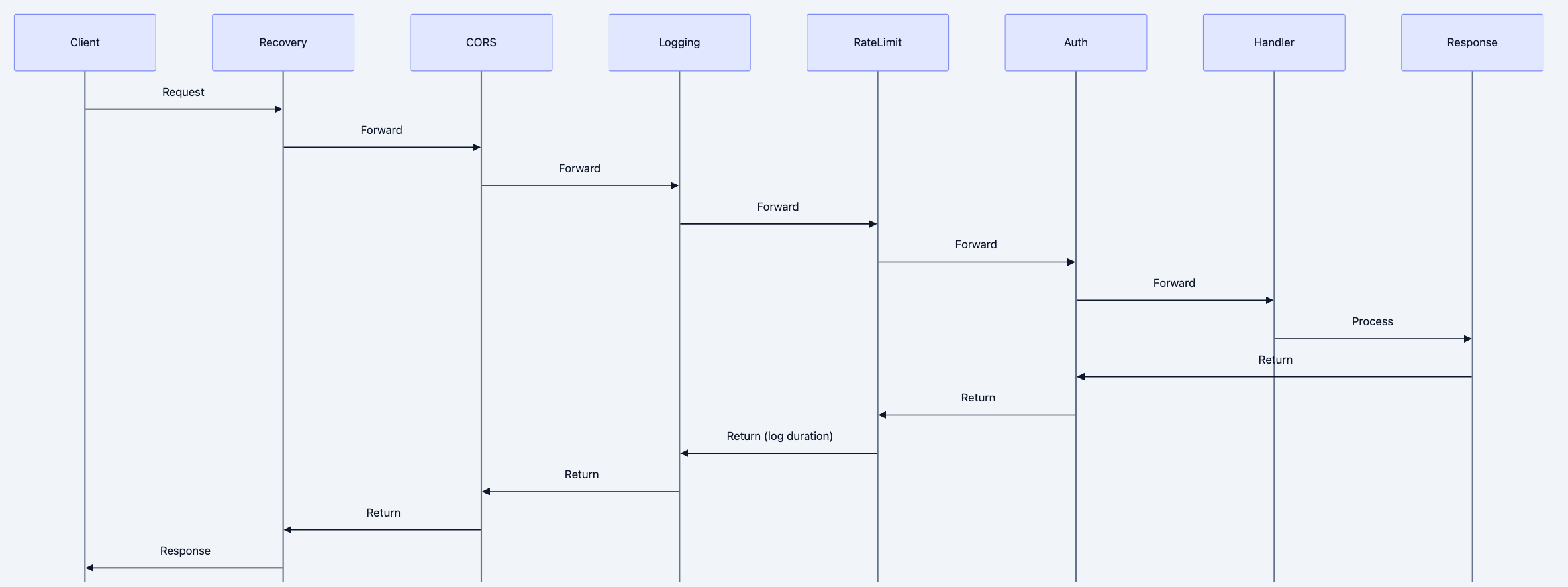
REST API architecture diagram 5
Recovery Middleware: Catching Panics
go// Filename: internal/middleware/recovery.go
package middleware

import (
    "log/slog"
    "net/http"
    "runtime/debug"

    "myapi/internal/pkg/response"
)

// RecoveryMiddleware recovers from panics
// Why: Panics in handlers shouldn't crash the entire server.
// This middleware catches panics, logs them, and returns a proper error.
type RecoveryMiddleware struct {
    logger *slog.Logger
}

func NewRecoveryMiddleware(logger *slog.Logger) *RecoveryMiddleware {
    return &RecoveryMiddleware{logger: logger}
}

// Recover wraps a handler with panic recovery
// Why: Without this, a panic in any handler would crash the server
// and leave the client hanging with no response.
func (m *RecoveryMiddleware) Recover(next http.Handler) http.Handler {
    return http.HandlerFunc(func(w http.ResponseWriter, r *http.Request) {
        defer func() {
            if err := recover(); err != nil {
                // Why: Log the full stack trace for debugging
                m.logger.Error("panic recovered",
                    "error", err,
                    "stack", string(debug.Stack()),
                    "path", r.URL.Path,
                    "method", r.Method,
                )

                // Why: Return 500 to client without exposing internal details
                response.Error(w, http.StatusInternalServerError,
                    "An unexpected error occurred")
            }
        }()

        next.ServeHTTP(w, r)
    })
}
Logging Middleware: Your Production Lifeline
go// Filename: internal/middleware/logging.go
package middleware

import (
    "log/slog"
    "net/http"
    "time"
)

// LoggingMiddleware logs HTTP requests
// Why: Request logs are essential for debugging, auditing,
// and understanding traffic patterns.
type LoggingMiddleware struct {
    logger *slog.Logger
}

func NewLoggingMiddleware(logger *slog.Logger) *LoggingMiddleware {
    return &LoggingMiddleware{logger: logger}
}

// responseWriter wraps http.ResponseWriter to capture status code
// Why: The standard ResponseWriter doesn't expose the status code
// after it's been written, so we need to capture it.
type responseWriter struct {
    http.ResponseWriter
    status      int
    wroteHeader bool
    size        int
}

func wrapResponseWriter(w http.ResponseWriter) *responseWriter {
    return &responseWriter{ResponseWriter: w, status: http.StatusOK}
}

func (rw *responseWriter) WriteHeader(code int) {
    if rw.wroteHeader {
        return
    }
    rw.status = code
    rw.wroteHeader = true
    rw.ResponseWriter.WriteHeader(code)
}

func (rw *responseWriter) Write(b []byte) (int, error) {
    rw.size += len(b)
    return rw.ResponseWriter.Write(b)
}

// Log wraps a handler with request logging
// Why: Every request should be logged for:
// - Debugging issues
// - Auditing access
// - Performance monitoring
// - Security analysis
func (m *LoggingMiddleware) Log(next http.Handler) http.Handler {
    return http.HandlerFunc(func(w http.ResponseWriter, r *http.Request) {
        start := time.Now()

        // Why: Wrap response writer to capture status code and size
        wrapped := wrapResponseWriter(w)

        // Why: Extract request ID for correlation
        requestID := r.Header.Get("X-Request-ID")
        if requestID == "" {
            requestID = generateRequestID()
        }

        // Why: Add request ID to response for client correlation
        wrapped.Header().Set("X-Request-ID", requestID)

        // Process request
        next.ServeHTTP(wrapped, r)

        // Why: Calculate duration after request completes
        duration := time.Since(start)

        // Why: Log with structured fields for easy parsing
        m.logger.Info("http request",
            "request_id", requestID,
            "method", r.Method,
            "path", r.URL.Path,
            "query", r.URL.RawQuery,
            "status", wrapped.status,
            "duration_ms", duration.Milliseconds(),
            "size", wrapped.size,
            "user_agent", r.UserAgent(),
            "remote_addr", r.RemoteAddr,
        )
    })
}

func generateRequestID() string {
    // In production, use a proper UUID library
    return time.Now().UnixNano()
}
CORS Middleware: Handling Cross Origin Requests
go// Filename: internal/middleware/cors.go
package middleware

import (
    "net/http"
    "strings"
)

// CORSConfig holds CORS configuration
type CORSConfig struct {
    AllowedOrigins   []string
    AllowedMethods   []string
    AllowedHeaders   []string
    ExposedHeaders   []string
    AllowCredentials bool
    MaxAge           int
}

// CORSMiddleware handles CORS
// Why: Browsers enforce CORS for security. Without proper CORS headers,
// frontend applications on different domains can't call your API.
type CORSMiddleware struct {
    config CORSConfig
}

func NewCORSMiddleware(config CORSConfig) *CORSMiddleware {
    return &CORSMiddleware{config: config}
}

// Handle adds CORS headers to responses
// Why: CORS involves two types of requests:
// 1. Simple requests: GET/POST with standard headers
// 2. Preflight requests: OPTIONS before complex requests
func (m *CORSMiddleware) Handle(next http.Handler) http.Handler {
    return http.HandlerFunc(func(w http.ResponseWriter, r *http.Request) {
        origin := r.Header.Get("Origin")

        // Why: Check if origin is allowed
        if m.isOriginAllowed(origin) {
            w.Header().Set("Access-Control-Allow-Origin", origin)

            if m.config.AllowCredentials {
                // Why: Required for cookies/auth headers to be sent
                w.Header().Set("Access-Control-Allow-Credentials", "true")
            }

            // Why: Tell browser which headers it can access
            if len(m.config.ExposedHeaders) > 0 {
                w.Header().Set("Access-Control-Expose-Headers",
                    strings.Join(m.config.ExposedHeaders, ", "))
            }
        }

        // Why: Handle preflight OPTIONS request
        if r.Method == http.MethodOptions {
            // Why: Tell browser what methods are allowed
            w.Header().Set("Access-Control-Allow-Methods",
                strings.Join(m.config.AllowedMethods, ", "))

            // Why: Tell browser what headers can be sent
            w.Header().Set("Access-Control-Allow-Headers",
                strings.Join(m.config.AllowedHeaders, ", "))

            // Why: Cache preflight response to reduce OPTIONS requests
            if m.config.MaxAge > 0 {
                w.Header().Set("Access-Control-Max-Age",
                    string(m.config.MaxAge))
            }

            // Why: 204 for successful preflight, no body needed
            w.WriteHeader(http.StatusNoContent)
            return
        }

        next.ServeHTTP(w, r)
    })
}

func (m *CORSMiddleware) isOriginAllowed(origin string) bool {
    // Why: "*" means allow all origins (not recommended for production)
    for _, allowed := range m.config.AllowedOrigins {
        if allowed == "*" || allowed == origin {
            return true
        }
    }
    return false
}
Request Validation: Trust Nobody
💡 Think of it like this: A bank doesn't trust you just because you walked through the door. They verify your ID, check your signature, confirm your account number. Your API should do the same with every request.
Never trust user input. Validate everything. This prevents security vulnerabilities, data corruption, and confusing errors.
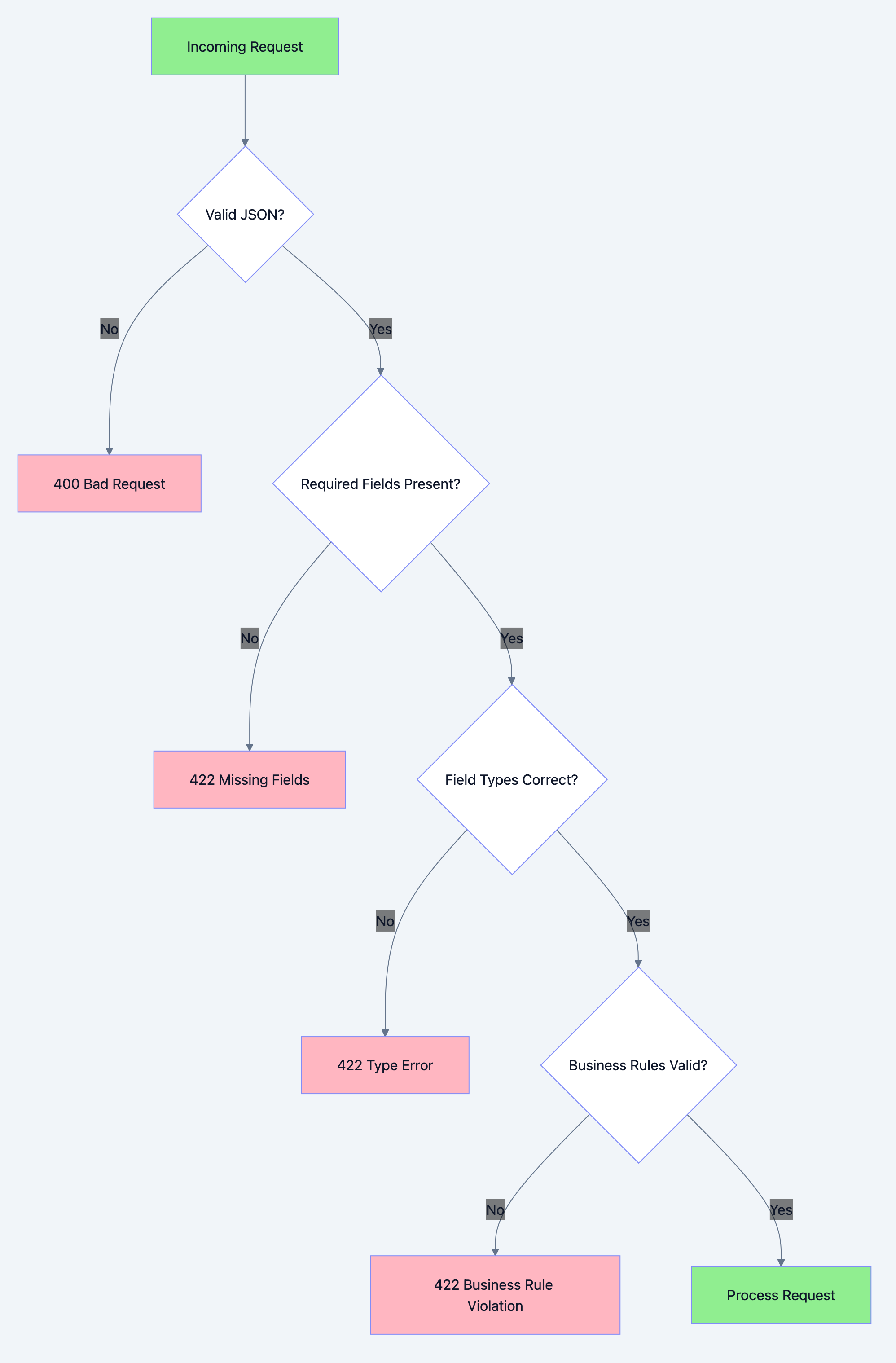
REST API architecture diagram 6
Comprehensive Validation Implementation
go// Filename: internal/pkg/validator/validator.go
package validator

import (
    "fmt"
    "net/mail"
    "regexp"
    "strings"
    "unicode"
)

// ValidationErrors holds field-level errors
// Why: Returning all errors at once is better UX than one at a time
type ValidationErrors map[string]string

func (v ValidationErrors) HasErrors() bool {
    return len(v) > 0
}

func (v ValidationErrors) Add(field, message string) {
    v[field] = message
}

// Validator provides validation methods
// Why: Centralizing validation logic ensures consistent rules
// across the application and makes testing easier.
type Validator struct {
    errors ValidationErrors
}

func New() *Validator {
    return &Validator{
        errors: make(ValidationErrors),
    }
}

func (v *Validator) Errors() ValidationErrors {
    return v.errors
}

// Required checks if a string is not empty
// Why: Most form fields require a value
func (v *Validator) Required(field, value, message string) *Validator {
    if strings.TrimSpace(value) == "" {
        v.errors.Add(field, message)
    }
    return v
}

// Email validates email format
// Why: Invalid emails cause delivery failures
func (v *Validator) Email(field, value string) *Validator {
    if value == "" {
        return v // Let Required handle empty check
    }

    _, err := mail.ParseAddress(value)
    if err != nil {
        v.errors.Add(field, "Invalid email format")
    }
    return v
}

// MinLength checks minimum string length
// Why: Passwords, usernames often have minimum lengths
func (v *Validator) MinLength(field, value string, min int) *Validator {
    if len(value) < min {
        v.errors.Add(field, fmt.Sprintf("Must be at least %d characters", min))
    }
    return v
}

// MaxLength checks maximum string length
// Why: Prevent database overflow and DoS via large inputs
func (v *Validator) MaxLength(field, value string, max int) *Validator {
    if len(value) > max {
        v.errors.Add(field, fmt.Sprintf("Must be at most %d characters", max))
    }
    return v
}

// Password validates password strength
// Why: Weak passwords are a security risk
func (v *Validator) Password(field, value string) *Validator {
    if len(value) < 8 {
        v.errors.Add(field, "Password must be at least 8 characters")
        return v
    }

    var hasUpper, hasLower, hasNumber, hasSpecial bool

    for _, char := range value {
        switch {
        case unicode.IsUpper(char):
            hasUpper = true
        case unicode.IsLower(char):
            hasLower = true
        case unicode.IsNumber(char):
            hasNumber = true
        case unicode.IsPunct(char) || unicode.IsSymbol(char):
            hasSpecial = true
        }
    }

    if !hasUpper || !hasLower || !hasNumber || !hasSpecial {
        v.errors.Add(field,
            "Password must contain uppercase, lowercase, number, and special character")
    }

    return v
}

// UUID validates UUID format
// Why: Invalid UUIDs will fail database lookups
func (v *Validator) UUID(field, value string) *Validator {
    uuidRegex := regexp.MustCompile(
        `^[0-9a-fA-F]{8}-[0-9a-fA-F]{4}-[0-9a-fA-F]{4}-[0-9a-fA-F]{4}-[0-9a-fA-F]{12}$`)

    if !uuidRegex.MatchString(value) {
        v.errors.Add(field, "Invalid UUID format")
    }
    return v
}

// InList checks if value is in allowed list
// Why: Enum-like fields should only accept known values
func (v *Validator) InList(field, value string, allowed []string) *Validator {
    for _, a := range allowed {
        if value == a {
            return v
        }
    }
    v.errors.Add(field, fmt.Sprintf("Must be one of: %s", strings.Join(allowed, ", ")))
    return v
}

// Range checks if a number is within range
// Why: Quantities, prices, ages have valid ranges
func (v *Validator) Range(field string, value, min, max int) *Validator {
    if value < min || value > max {
        v.errors.Add(field, fmt.Sprintf("Must be between %d and %d", min, max))
    }
    return v
}

// Positive checks if number is positive
// Why: Prices, quantities can't be negative
func (v *Validator) Positive(field string, value int) *Validator {
    if value <= 0 {
        v.errors.Add(field, "Must be a positive number")
    }
    return v
}

// URL validates URL format
// Why: Invalid URLs break links and integrations
func (v *Validator) URL(field, value string) *Validator {
    if value == "" {
        return v
    }

    urlRegex := regexp.MustCompile(`^https?://[^\s/$.?#].[^\s]*$`)
    if !urlRegex.MatchString(value) {
        v.errors.Add(field, "Invalid URL format")
    }
    return v
}

// Phone validates phone number (basic validation)
// Why: Invalid phone numbers can't receive SMS
func (v *Validator) Phone(field, value string) *Validator {
    if value == "" {
        return v
    }

    // Remove common formatting characters
    cleaned := regexp.MustCompile(`[\s\-\(\)\+]`).ReplaceAllString(value, "")

    if len(cleaned) < 10 || len(cleaned) > 15 {
        v.errors.Add(field, "Invalid phone number")
    }
    return v
}
Using Validation in Handlers
go// Filename: internal/handler/user_handler.go (continued)
package handler

import (
    "encoding/json"
    "net/http"

    "myapi/internal/pkg/response"
    "myapi/internal/pkg/validator"
)

// CreateUser with full validation
func (h *UserHandler) CreateUser(w http.ResponseWriter, r *http.Request) {
    // Step 1: Parse request body
    // Why: Decode JSON first, then validate fields
    var req CreateUserRequest
    if err := json.NewDecoder(r.Body).Decode(&req); err != nil {
        response.Error(w, http.StatusBadRequest, "Invalid JSON")
        return
    }

    // Step 2: Validate all fields
    // Why: Chain validations for clean code, collect all errors
    v := validator.New()
    v.Required("email", req.Email, "Email is required").
        Email("email", req.Email)
    v.Required("name", req.Name, "Name is required").
        MinLength("name", req.Name, 2).
        MaxLength("name", req.Name, 100)
    v.Required("password", req.Password, "Password is required").
        Password("password", req.Password)
    v.Required("role", req.Role, "Role is required").
        InList("role", req.Role, []string{"admin", "user", "guest"})

    // Step 3: Return validation errors if any
    // Why: Return all errors at once for better UX
    if v.Errors().HasErrors() {
        response.ValidationError(w, v.Errors())
        return
    }

    // Step 4: Process valid request
    // Why: Now we can trust the input
    user, err := h.service.CreateUser(
        r.Context(),
        req.Email,
        req.Name,
        req.Password,
        req.Role,
    )
    if err != nil {
        // Why: Handle business logic errors (e.g., duplicate email)
        response.Error(w, http.StatusConflict, err.Error())
        return
    }

    w.Header().Set("Location", "/api/v1/users/"+user.ID)
    response.JSON(w, http.StatusCreated, user)
}

type CreateUserRequest struct {
    Email    string `json:"email"`
    Name     string `json:"name"`
    Password string `json:"password"`
    Role     string `json:"role"`
}
Error Handling: Failing Gracefully
Errors are inevitable. How you handle them determines whether your API is a joy or a nightmare to work with.
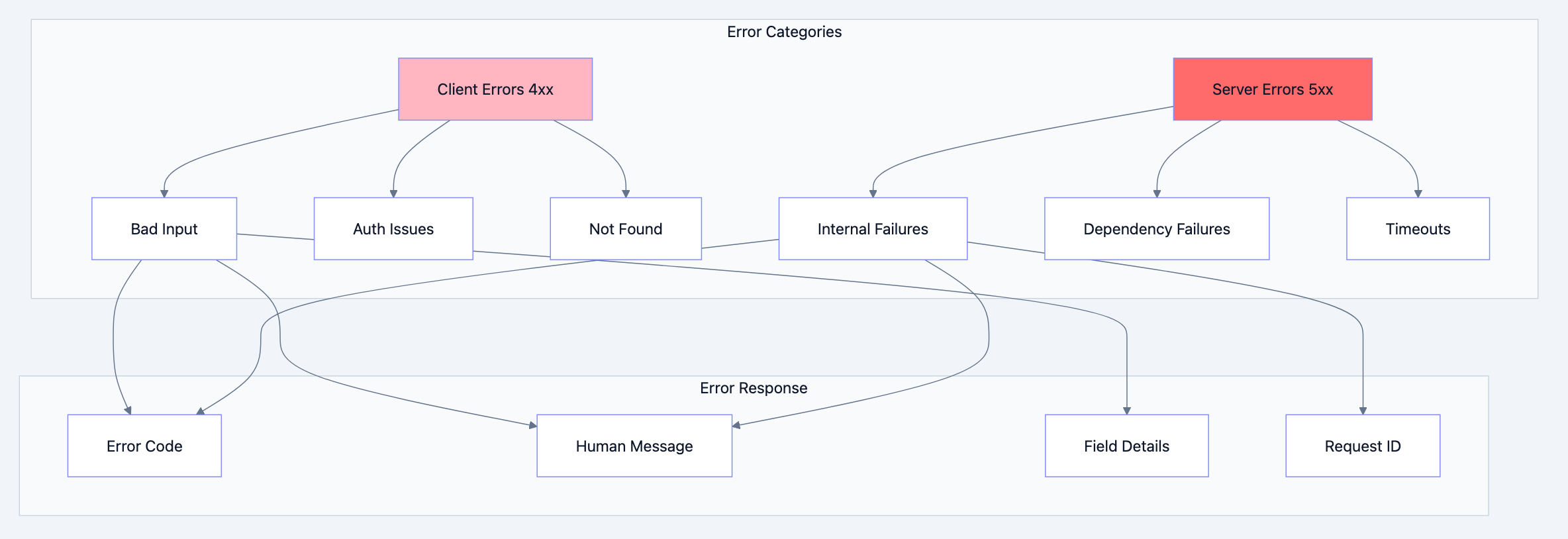
REST API architecture diagram 7
Custom Error Types
go// Filename: internal/pkg/errors/errors.go
package errors

import (
    "errors"
    "fmt"
    "net/http"
)

// AppError represents an application error
// Why: Custom error type allows us to:
// 1. Include HTTP status code
// 2. Separate internal and external messages
// 3. Add context like error codes
type AppError struct {
    Code       string // Machine-readable code
    Message    string // User-friendly message
    Internal   string // Internal details (logged, not returned)
    StatusCode int    // HTTP status code
    Err        error  // Wrapped error for error chain
}

func (e *AppError) Error() string {
    if e.Err != nil {
        return fmt.Sprintf("%s: %v", e.Message, e.Err)
    }
    return e.Message
}

// Unwrap allows errors.Is and errors.As to work
func (e *AppError) Unwrap() error {
    return e.Err
}

// Error constructors for common cases
// Why: Consistent error creation across the codebase

func NotFound(resource string) *AppError {
    return &AppError{
        Code:       "NOT_FOUND",
        Message:    fmt.Sprintf("%s not found", resource),
        StatusCode: http.StatusNotFound,
    }
}

func BadRequest(message string) *AppError {
    return &AppError{
        Code:       "BAD_REQUEST",
        Message:    message,
        StatusCode: http.StatusBadRequest,
    }
}

func Unauthorized(message string) *AppError {
    return &AppError{
        Code:       "UNAUTHORIZED",
        Message:    message,
        StatusCode: http.StatusUnauthorized,
    }
}

func Forbidden(message string) *AppError {
    return &AppError{
        Code:       "FORBIDDEN",
        Message:    message,
        StatusCode: http.StatusForbidden,
    }
}

func Conflict(message string) *AppError {
    return &AppError{
        Code:       "CONFLICT",
        Message:    message,
        StatusCode: http.StatusConflict,
    }
}

func InternalError(internal string, err error) *AppError {
    return &AppError{
        Code:       "INTERNAL_ERROR",
        Message:    "An internal error occurred",
        Internal:   internal,
        StatusCode: http.StatusInternalServerError,
        Err:        err,
    }
}

func DatabaseError(operation string, err error) *AppError {
    return &AppError{
        Code:       "DATABASE_ERROR",
        Message:    "A database error occurred",
        Internal:   fmt.Sprintf("database %s failed", operation),
        StatusCode: http.StatusInternalServerError,
        Err:        err,
    }
}

func ServiceUnavailable(service string) *AppError {
    return &AppError{
        Code:       "SERVICE_UNAVAILABLE",
        Message:    fmt.Sprintf("%s is currently unavailable", service),
        StatusCode: http.StatusServiceUnavailable,
    }
}

func RateLimited() *AppError {
    return &AppError{
        Code:       "RATE_LIMITED",
        Message:    "Too many requests. Please try again later.",
        StatusCode: http.StatusTooManyRequests,
    }
}

// IsNotFound checks if error is a not found error
// Why: Allow callers to check error type without type assertion
func IsNotFound(err error) bool {
    var appErr *AppError
    if errors.As(err, &appErr) {
        return appErr.Code == "NOT_FOUND"
    }
    return false
}

// IsConflict checks if error is a conflict error
func IsConflict(err error) bool {
    var appErr *AppError
    if errors.As(err, &appErr) {
        return appErr.Code == "CONFLICT"
    }
    return false
}
Error Handling Middleware
go// Filename: internal/middleware/error_handler.go
package middleware

import (
    "errors"
    "log/slog"
    "net/http"

    apperrors "myapi/internal/pkg/errors"
    "myapi/internal/pkg/response"
)

// ErrorHandler is a middleware that handles errors returned by handlers
// Why: Centralizes error response formatting and logging
type ErrorHandler struct {
    logger *slog.Logger
}

func NewErrorHandler(logger *slog.Logger) *ErrorHandler {
    return &ErrorHandler{logger: logger}
}

// HandleError processes an error and sends appropriate response
// Why: Single point for error response logic
func (h *ErrorHandler) HandleError(w http.ResponseWriter, r *http.Request, err error) {
    // Why: Check if it's our custom AppError
    var appErr *apperrors.AppError
    if errors.As(err, &appErr) {
        // Log internal details if present
        if appErr.Internal != "" {
            h.logger.Error("application error",
                "code", appErr.Code,
                "message", appErr.Message,
                "internal", appErr.Internal,
                "path", r.URL.Path,
                "method", r.Method,
            )
        }

        // Return sanitized error to client
        response.Error(w, appErr.StatusCode, appErr.Message)
        return
    }

    // Why: Unknown errors get logged with full details
    h.logger.Error("unexpected error",
        "error", err.Error(),
        "path", r.URL.Path,
        "method", r.Method,
    )

    // Why: Don't expose internal error details to client
    response.Error(w, http.StatusInternalServerError,
        "An unexpected error occurred")
}
Authentication: Who Are You?
Authentication verifies the identity of the requester. Without it, anyone can access your API.
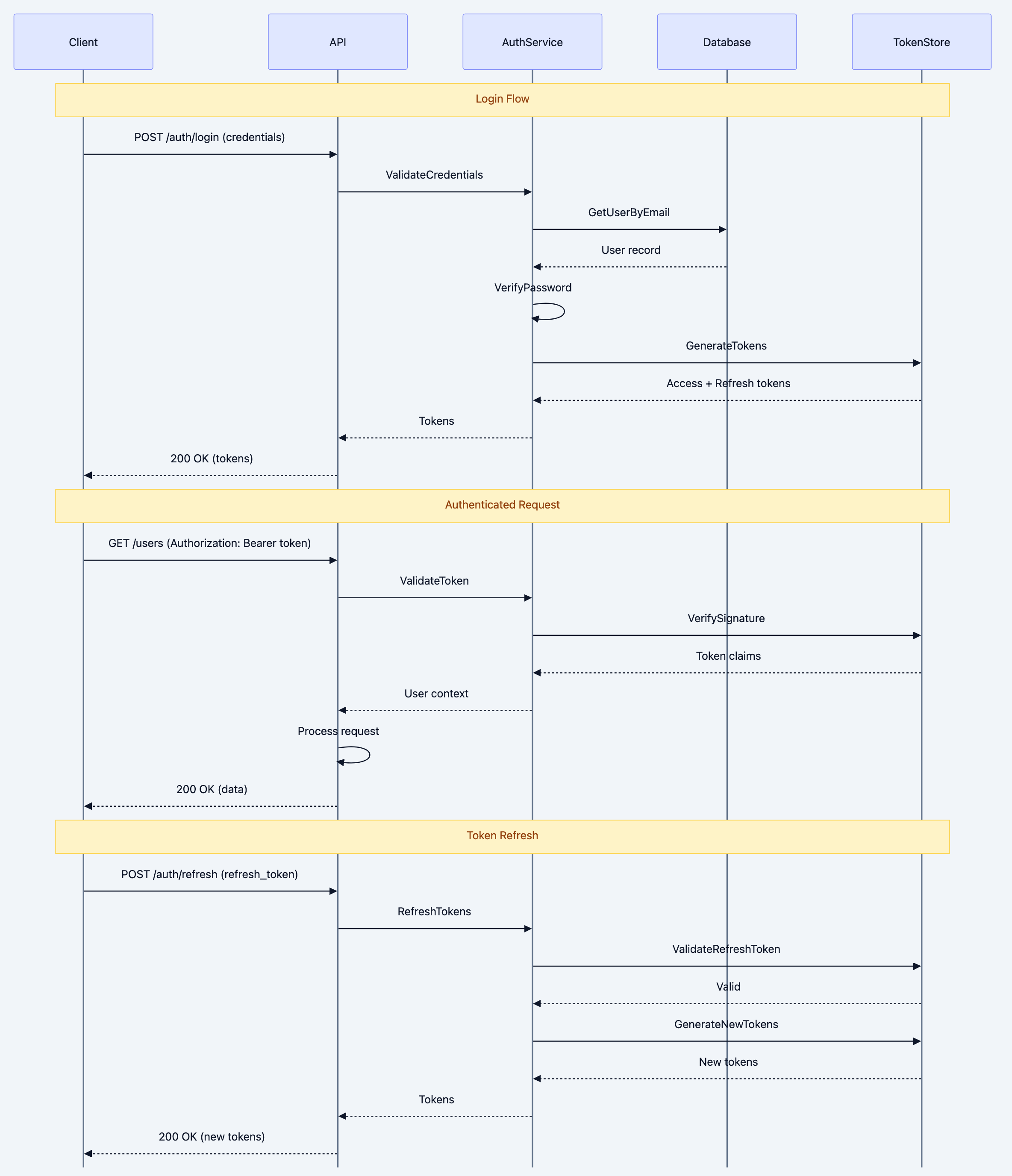
REST API architecture diagram 8
JWT Authentication Implementation
go// Filename: internal/auth/jwt.go
package auth

import (
    "errors"
    "time"

    "github.com/golang-jwt/jwt/v5"
)

// TokenConfig holds JWT configuration
type TokenConfig struct {
    SecretKey          string
    AccessTokenExpiry  time.Duration
    RefreshTokenExpiry time.Duration
    Issuer             string
}

// Claims represents JWT claims
// Why: Custom claims allow us to include user info in the token,
// avoiding database lookups for every authenticated request.
type Claims struct {
    UserID string `json:"user_id"`
    Email  string `json:"email"`
    Role   string `json:"role"`
    jwt.RegisteredClaims
}

// TokenPair holds access and refresh tokens
type TokenPair struct {
    AccessToken  string `json:"access_token"`
    RefreshToken string `json:"refresh_token"`
    ExpiresIn    int64  `json:"expires_in"` // Seconds until access token expires
}

// JWTService handles JWT operations
// Why: Encapsulating JWT logic makes it easy to:
// 1. Test token generation/validation
// 2. Switch to different token libraries
// 3. Change token configuration
type JWTService struct {
    config TokenConfig
}

func NewJWTService(config TokenConfig) *JWTService {
    return &JWTService{config: config}
}

// GenerateTokenPair creates access and refresh tokens
// Why: Access tokens are short-lived for security.
// Refresh tokens allow getting new access tokens without re-login.
func (s *JWTService) GenerateTokenPair(userID, email, role string) (*TokenPair, error) {
    now := time.Now()

    // Create access token
    // Why: Short expiry (15 min) limits damage if token is stolen
    accessClaims := Claims{
        UserID: userID,
        Email:  email,
        Role:   role,
        RegisteredClaims: jwt.RegisteredClaims{
            ExpiresAt: jwt.NewNumericDate(now.Add(s.config.AccessTokenExpiry)),
            IssuedAt:  jwt.NewNumericDate(now),
            NotBefore: jwt.NewNumericDate(now),
            Issuer:    s.config.Issuer,
            Subject:   userID,
        },
    }

    accessToken := jwt.NewWithClaims(jwt.SigningMethodHS256, accessClaims)
    accessTokenString, err := accessToken.SignedString([]byte(s.config.SecretKey))
    if err != nil {
        return nil, err
    }

    // Create refresh token
    // Why: Longer expiry (7 days) for convenience
    // Contains minimal claims for security
    refreshClaims := jwt.RegisteredClaims{
        ExpiresAt: jwt.NewNumericDate(now.Add(s.config.RefreshTokenExpiry)),
        IssuedAt:  jwt.NewNumericDate(now),
        NotBefore: jwt.NewNumericDate(now),
        Issuer:    s.config.Issuer,
        Subject:   userID,
    }

    refreshToken := jwt.NewWithClaims(jwt.SigningMethodHS256, refreshClaims)
    refreshTokenString, err := refreshToken.SignedString([]byte(s.config.SecretKey))
    if err != nil {
        return nil, err
    }

    return &TokenPair{
        AccessToken:  accessTokenString,
        RefreshToken: refreshTokenString,
        ExpiresIn:    int64(s.config.AccessTokenExpiry.Seconds()),
    }, nil
}

// ValidateAccessToken validates and parses an access token
// Why: Every authenticated request needs token validation
func (s *JWTService) ValidateAccessToken(tokenString string) (*Claims, error) {
    token, err := jwt.ParseWithClaims(tokenString, &Claims{}, func(token *jwt.Token) (interface{}, error) {
        // Why: Verify signing method to prevent algorithm confusion attacks
        if _, ok := token.Method.(*jwt.SigningMethodHMAC); !ok {
            return nil, errors.New("unexpected signing method")
        }
        return []byte(s.config.SecretKey), nil
    })

    if err != nil {
        return nil, err
    }

    claims, ok := token.Claims.(*Claims)
    if !ok || !token.Valid {
        return nil, errors.New("invalid token")
    }

    return claims, nil
}

// ValidateRefreshToken validates a refresh token and returns the user ID
// Why: Refresh tokens have different claims structure
func (s *JWTService) ValidateRefreshToken(tokenString string) (string, error) {
    token, err := jwt.ParseWithClaims(tokenString, &jwt.RegisteredClaims{}, func(token *jwt.Token) (interface{}, error) {
        if _, ok := token.Method.(*jwt.SigningMethodHMAC); !ok {
            return nil, errors.New("unexpected signing method")
        }
        return []byte(s.config.SecretKey), nil
    })

    if err != nil {
        return "", err
    }

    claims, ok := token.Claims.(*jwt.RegisteredClaims)
    if !ok || !token.Valid {
        return "", errors.New("invalid token")
    }

    return claims.Subject, nil
}
Authentication Middleware
go// Filename: internal/middleware/auth.go
package middleware

import (
    "context"
    "net/http"
    "strings"

    "myapi/internal/auth"
    "myapi/internal/pkg/response"
)

// Context keys for user data
type contextKey string

const (
    UserIDKey  contextKey = "user_id"
    UserEmail contextKey = "user_email"
    UserRole  contextKey = "user_role"
)

// AuthMiddleware handles authentication
type AuthMiddleware struct {
    jwtService *auth.JWTService
}

func NewAuthMiddleware(jwtService *auth.JWTService) *AuthMiddleware {
    return &AuthMiddleware{jwtService: jwtService}
}

// Authenticate validates JWT token and adds user to context
// Why: Separating auth from handlers allows:
// 1. Reuse across many endpoints
// 2. Consistent auth behavior
// 3. Easy testing of handlers without auth
func (m *AuthMiddleware) Authenticate(next http.Handler) http.Handler {
    return http.HandlerFunc(func(w http.ResponseWriter, r *http.Request) {
        // Step 1: Extract token from Authorization header
        // Why: Bearer token is the standard for JWT auth
        authHeader := r.Header.Get("Authorization")
        if authHeader == "" {
            response.Error(w, http.StatusUnauthorized, "Missing authorization header")
            return
        }

        // Why: Format is "Bearer <token>"
        parts := strings.Split(authHeader, " ")
        if len(parts) != 2 || parts[0] != "Bearer" {
            response.Error(w, http.StatusUnauthorized, "Invalid authorization format")
            return
        }

        tokenString := parts[1]

        // Step 2: Validate token
        // Why: Verifies signature and expiry
        claims, err := m.jwtService.ValidateAccessToken(tokenString)
        if err != nil {
            response.Error(w, http.StatusUnauthorized, "Invalid or expired token")
            return
        }

        // Step 3: Add user info to request context
        // Why: Allows handlers to access user info without parsing token again
        ctx := context.WithValue(r.Context(), UserIDKey, claims.UserID)
        ctx = context.WithValue(ctx, UserEmail, claims.Email)
        ctx = context.WithValue(ctx, UserRole, claims.Role)

        next.ServeHTTP(w, r.WithContext(ctx))
    })
}

// RequireRole checks if user has required role
// Why: Some endpoints need specific roles (admin only, etc.)
func (m *AuthMiddleware) RequireRole(roles ...string) func(http.Handler) http.Handler {
    return func(next http.Handler) http.Handler {
        return http.HandlerFunc(func(w http.ResponseWriter, r *http.Request) {
            userRole, ok := r.Context().Value(UserRole).(string)
            if !ok {
                response.Error(w, http.StatusForbidden, "Access denied")
                return
            }

            // Why: Check if user's role is in allowed roles
            for _, role := range roles {
                if userRole == role {
                    next.ServeHTTP(w, r)
                    return
                }
            }

            response.Error(w, http.StatusForbidden,
                "You don't have permission to access this resource")
        })
    }
}

// Helper functions to extract user info from context
// Why: Type-safe context value extraction

func GetUserID(ctx context.Context) string {
    if id, ok := ctx.Value(UserIDKey).(string); ok {
        return id
    }
    return ""
}

func GetUserEmail(ctx context.Context) string {
    if email, ok := ctx.Value(UserEmail).(string); ok {
        return email
    }
    return ""
}

func GetUserRole(ctx context.Context) string {
    if role, ok := ctx.Value(UserRole).(string); ok {
        return role
    }
    return ""
}
Password Hashing
go// Filename: internal/auth/password.go
package auth

import (
    "golang.org/x/crypto/bcrypt"
)

// PasswordService handles password hashing and verification
// Why: Never store plain text passwords. bcrypt is the gold standard
// for password hashing because it:
// 1. Is slow by design (prevents brute force)
// 2. Includes salt automatically
// 3. Has configurable cost factor
type PasswordService struct {
    cost int // bcrypt cost factor
}

func NewPasswordService() *PasswordService {
    return &PasswordService{
        cost: bcrypt.DefaultCost, // 10 - good balance of security and speed
    }
}

// HashPassword creates a bcrypt hash of the password
// Why: The hash includes salt and cost, so we only store this hash
func (s *PasswordService) HashPassword(password string) (string, error) {
    bytes, err := bcrypt.GenerateFromPassword([]byte(password), s.cost)
    if err != nil {
        return "", err
    }
    return string(bytes), nil
}

// VerifyPassword checks if password matches hash
// Why: bcrypt.CompareHashAndPassword is timing-safe,
// preventing timing attacks that could reveal password info
func (s *PasswordService) VerifyPassword(password, hash string) bool {
    err := bcrypt.CompareHashAndPassword([]byte(hash), []byte(password))
    return err == nil
}
Authorization: What Can You Do?
Authentication tells you who someone is. Authorization tells you what they can do. These are different concerns.
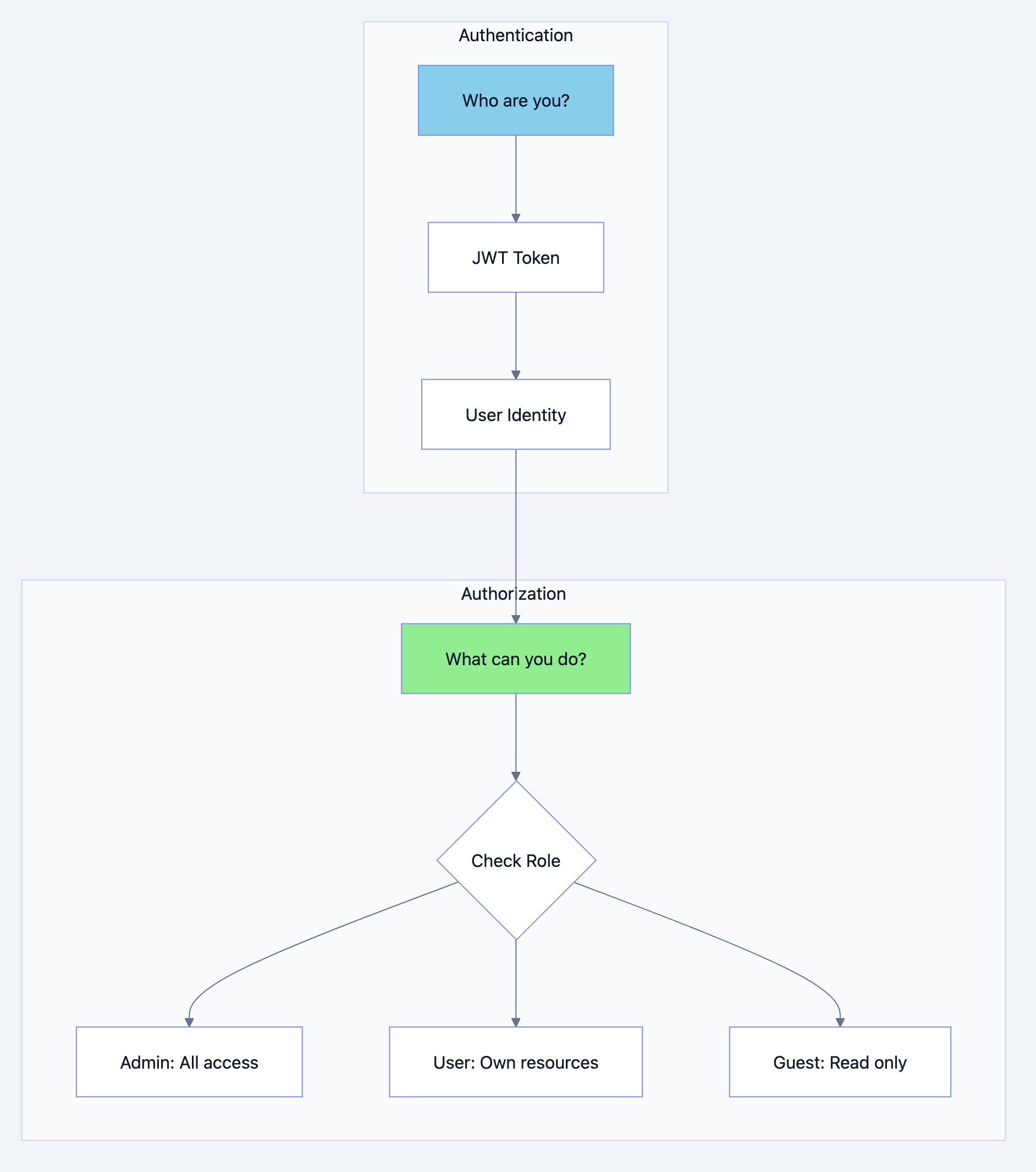
REST API architecture diagram 9
Role Based Access Control (RBAC)
go// Filename: internal/auth/rbac.go
package auth

import (
    "context"
)

// Permission represents a single permission
type Permission string

const (
    PermUserCreate Permission = "user:create"
    PermUserRead   Permission = "user:read"
    PermUserUpdate Permission = "user:update"
    PermUserDelete Permission = "user:delete"
    PermUserList   Permission = "user:list"

    PermOrderCreate Permission = "order:create"
    PermOrderRead   Permission = "order:read"
    PermOrderUpdate Permission = "order:update"
    PermOrderDelete Permission = "order:delete"
    PermOrderList   Permission = "order:list"

    PermAdminAccess Permission = "admin:access"
)

// Role represents a user role with permissions
type Role string

const (
    RoleAdmin Role = "admin"
    RoleUser  Role = "user"
    RoleGuest Role = "guest"
)

// RolePermissions maps roles to their permissions
// Why: Centralizing permissions makes it easy to:
// 1. Audit who can do what
// 2. Modify permissions without code changes
// 3. Test authorization logic
var RolePermissions = map[Role][]Permission{
    RoleAdmin: {
        PermUserCreate, PermUserRead, PermUserUpdate, PermUserDelete, PermUserList,
        PermOrderCreate, PermOrderRead, PermOrderUpdate, PermOrderDelete, PermOrderList,
        PermAdminAccess,
    },
    RoleUser: {
        PermUserRead, PermUserUpdate, // Own profile only
        PermOrderCreate, PermOrderRead, PermOrderList, // Own orders only
    },
    RoleGuest: {
        PermUserRead, // Public profiles only
    },
}

// Authorizer handles authorization checks
type Authorizer struct{}

func NewAuthorizer() *Authorizer {
    return &Authorizer{}
}

// HasPermission checks if a role has a specific permission
// Why: Simple permission check for endpoint-level authorization
func (a *Authorizer) HasPermission(role Role, permission Permission) bool {
    permissions, ok := RolePermissions[role]
    if !ok {
        return false
    }

    for _, p := range permissions {
        if p == permission {
            return true
        }
    }
    return false
}

// CanAccessResource checks if user can access a specific resource
// Why: Resource-level authorization (can user X access resource Y?)
func (a *Authorizer) CanAccessResource(ctx context.Context, resourceOwnerID string) bool {
    userID := GetUserID(ctx)
    userRole := Role(GetUserRole(ctx))

    // Admins can access everything
    if userRole == RoleAdmin {
        return true
    }

    // Users can only access their own resources
    return userID == resourceOwnerID
}
Authorization Middleware
go// Filename: internal/middleware/authorization.go
package middleware

import (
    "net/http"

    "myapi/internal/auth"
    "myapi/internal/pkg/response"
)

// AuthorizationMiddleware handles authorization
type AuthorizationMiddleware struct {
    authorizer *auth.Authorizer
}

func NewAuthorizationMiddleware(authorizer *auth.Authorizer) *AuthorizationMiddleware {
    return &AuthorizationMiddleware{authorizer: authorizer}
}

// RequirePermission checks if user has required permission
// Why: Declarative permission checking at the route level
func (m *AuthorizationMiddleware) RequirePermission(permission auth.Permission) func(http.Handler) http.Handler {
    return func(next http.Handler) http.Handler {
        return http.HandlerFunc(func(w http.ResponseWriter, r *http.Request) {
            userRole := auth.Role(GetUserRole(r.Context()))

            if !m.authorizer.HasPermission(userRole, permission) {
                response.Error(w, http.StatusForbidden,
                    "You don't have permission to perform this action")
                return
            }

            next.ServeHTTP(w, r)
        })
    }
}

// RequireResourceOwnership ensures user owns the resource
// Why: Users should only modify their own resources
func (m *AuthorizationMiddleware) RequireResourceOwnership(getOwnerID func(*http.Request) string) func(http.Handler) http.Handler {
    return func(next http.Handler) http.Handler {
        return http.HandlerFunc(func(w http.ResponseWriter, r *http.Request) {
            ownerID := getOwnerID(r)

            if !m.authorizer.CanAccessResource(r.Context(), ownerID) {
                response.Error(w, http.StatusForbidden,
                    "You don't have access to this resource")
                return
            }

            next.ServeHTTP(w, r)
        })
    }
}
Database Patterns for APIs
The database layer is where many APIs fail under load. Proper patterns here make the difference between an API that scales and one that crashes.
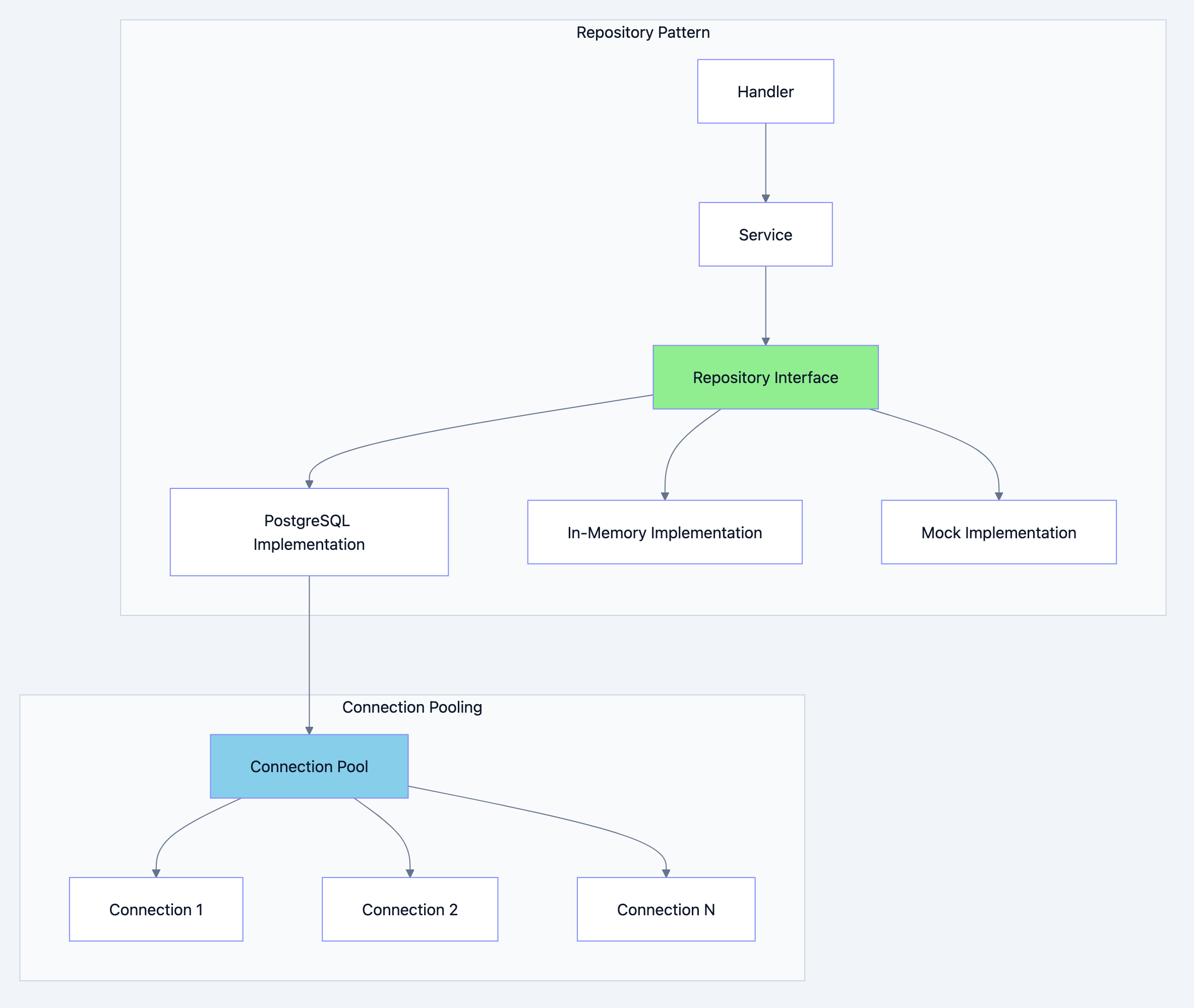
REST API architecture diagram 10
Repository Pattern Implementation
go// Filename: internal/repository/postgres/user_repo.go
package postgres

import (
    "context"
    "database/sql"
    "errors"
    "time"

    "myapi/internal/domain/user"
    apperrors "myapi/internal/pkg/errors"
)

// UserRepository implements user.Repository for PostgreSQL
// Why: Concrete implementation of the repository interface.
// This separation allows:
// 1. Switching databases without changing business logic
// 2. Easy mocking for tests
// 3. Different implementations for different environments
type UserRepository struct {
    db *sql.DB
}

func NewUserRepository(db *sql.DB) *UserRepository {
    return &UserRepository{db: db}
}

// Create inserts a new user
// Why: Uses parameterized queries to prevent SQL injection
func (r *UserRepository) Create(ctx context.Context, u *user.User) (*user.User, error) {
    query := `
        INSERT INTO users (id, email, name, role, password_hash, created_at, updated_at)
        VALUES ($1, $2, $3, $4, $5, $6, $7)
        RETURNING id, email, name, role, created_at, updated_at`

    // Why: QueryRowContext with timeout ensures we don't hang forever
    err := r.db.QueryRowContext(ctx, query,
        u.ID, u.Email, u.Name, u.Role, u.PasswordHash, u.CreatedAt, u.UpdatedAt,
    ).Scan(&u.ID, &u.Email, &u.Name, &u.Role, &u.CreatedAt, &u.UpdatedAt)

    if err != nil {
        // Why: Check for unique constraint violation (duplicate email)
        if isDuplicateKeyError(err) {
            return nil, apperrors.Conflict("Email already exists")
        }
        return nil, apperrors.DatabaseError("insert user", err)
    }

    return u, nil
}

// GetByID retrieves a user by ID
// Why: Single record lookup with proper error handling
func (r *UserRepository) GetByID(ctx context.Context, id string) (*user.User, error) {
    query := `
        SELECT id, email, name, role, created_at, updated_at
        FROM users
        WHERE id = $1 AND deleted_at IS NULL`

    u := &user.User{}
    err := r.db.QueryRowContext(ctx, query, id).Scan(
        &u.ID, &u.Email, &u.Name, &u.Role, &u.CreatedAt, &u.UpdatedAt,
    )

    if err != nil {
        if errors.Is(err, sql.ErrNoRows) {
            return nil, apperrors.NotFound("User")
        }
        return nil, apperrors.DatabaseError("get user", err)
    }

    return u, nil
}

// GetByEmail retrieves a user by email
// Why: Needed for authentication (login by email)
func (r *UserRepository) GetByEmail(ctx context.Context, email string) (*user.User, error) {
    query := `
        SELECT id, email, name, role, password_hash, created_at, updated_at
        FROM users
        WHERE email = $1 AND deleted_at IS NULL`

    u := &user.User{}
    err := r.db.QueryRowContext(ctx, query, email).Scan(
        &u.ID, &u.Email, &u.Name, &u.Role, &u.PasswordHash, &u.CreatedAt, &u.UpdatedAt,
    )

    if err != nil {
        if errors.Is(err, sql.ErrNoRows) {
            return nil, apperrors.NotFound("User")
        }
        return nil, apperrors.DatabaseError("get user by email", err)
    }

    return u, nil
}

// Update modifies an existing user
// Why: Only update non-null fields, use optimistic locking
func (r *UserRepository) Update(ctx context.Context, u *user.User) (*user.User, error) {
    query := `
        UPDATE users
        SET name = $2, role = $3, updated_at = $4
        WHERE id = $1 AND deleted_at IS NULL
        RETURNING id, email, name, role, created_at, updated_at`

    err := r.db.QueryRowContext(ctx, query,
        u.ID, u.Name, u.Role, time.Now().UTC(),
    ).Scan(&u.ID, &u.Email, &u.Name, &u.Role, &u.CreatedAt, &u.UpdatedAt)

    if err != nil {
        if errors.Is(err, sql.ErrNoRows) {
            return nil, apperrors.NotFound("User")
        }
        return nil, apperrors.DatabaseError("update user", err)
    }

    return u, nil
}

// Delete soft-deletes a user
// Why: Soft delete preserves data for audit and recovery
func (r *UserRepository) Delete(ctx context.Context, id string) error {
    query := `
        UPDATE users
        SET deleted_at = $2
        WHERE id = $1 AND deleted_at IS NULL`

    result, err := r.db.ExecContext(ctx, query, id, time.Now().UTC())
    if err != nil {
        return apperrors.DatabaseError("delete user", err)
    }

    rows, err := result.RowsAffected()
    if err != nil {
        return apperrors.DatabaseError("delete user", err)
    }

    if rows == 0 {
        return apperrors.NotFound("User")
    }

    return nil
}

// List returns paginated users
// Why: Never return all records. Always paginate.
func (r *UserRepository) List(ctx context.Context, offset, limit int) ([]*user.User, int, error) {
    // Why: Get total count for pagination metadata
    var total int
    countQuery := `SELECT COUNT(*) FROM users WHERE deleted_at IS NULL`
    if err := r.db.QueryRowContext(ctx, countQuery).Scan(&total); err != nil {
        return nil, 0, apperrors.DatabaseError("count users", err)
    }

    // Why: Order by created_at for consistent pagination
    query := `
        SELECT id, email, name, role, created_at, updated_at
        FROM users
        WHERE deleted_at IS NULL
        ORDER BY created_at DESC
        LIMIT $1 OFFSET $2`

    rows, err := r.db.QueryContext(ctx, query, limit, offset)
    if err != nil {
        return nil, 0, apperrors.DatabaseError("list users", err)
    }
    defer rows.Close()

    users := make([]*user.User, 0)
    for rows.Next() {
        u := &user.User{}
        if err := rows.Scan(&u.ID, &u.Email, &u.Name, &u.Role, &u.CreatedAt, &u.UpdatedAt); err != nil {
            return nil, 0, apperrors.DatabaseError("scan user", err)
        }
        users = append(users, u)
    }

    if err := rows.Err(); err != nil {
        return nil, 0, apperrors.DatabaseError("iterate users", err)
    }

    return users, total, nil
}

// isDuplicateKeyError checks for PostgreSQL unique constraint violation
func isDuplicateKeyError(err error) bool {
    // PostgreSQL error code 23505 is unique_violation
    return err != nil && (err.Error() == "23505" ||
        contains(err.Error(), "duplicate key"))
}

func contains(s, substr string) bool {
    return len(s) >= len(substr) && s[:len(substr)] == substr
}
Database Connection Pooling
go// Filename: internal/config/database.go
package config

import (
    "context"
    "database/sql"
    "fmt"
    "time"

    _ "github.com/lib/pq"
)

// DatabaseConfig holds database configuration
type DatabaseConfig struct {
    Host            string
    Port            int
    User            string
    Password        string
    Database        string
    SSLMode         string
    MaxOpenConns    int           // Maximum open connections
    MaxIdleConns    int           // Maximum idle connections
    ConnMaxLifetime time.Duration // Maximum connection lifetime
    ConnMaxIdleTime time.Duration // Maximum idle time
}

// NewDatabaseConnection creates a configured database connection pool
// Why: Connection pooling is essential for production APIs.
// Without it, each request opens a new connection, which is:
// 1. Slow (connection overhead)
// 2. Resource intensive (file descriptors)
// 3. Can exhaust database connection limits
func NewDatabaseConnection(cfg DatabaseConfig) (*sql.DB, error) {
    dsn := fmt.Sprintf(
        "host=%s port=%d user=%s password=%s dbname=%s sslmode=%s",
        cfg.Host, cfg.Port, cfg.User, cfg.Password, cfg.Database, cfg.SSLMode,
    )

    db, err := sql.Open("postgres", dsn)
    if err != nil {
        return nil, fmt.Errorf("failed to open database: %w", err)
    }

    // Why: Configure connection pool for production workloads
    // These settings prevent resource exhaustion

    // MaxOpenConns: Upper limit on concurrent connections
    // Too high: exhausts database resources
    // Too low: requests queue waiting for connections
    // Rule of thumb: 2-4x CPU cores for write-heavy, more for read-heavy
    db.SetMaxOpenConns(cfg.MaxOpenConns) // e.g., 25

    // MaxIdleConns: Connections kept open when not in use
    // Should be less than MaxOpenConns
    // Higher = faster response (reuses connections)
    // Lower = less resource usage when idle
    db.SetMaxIdleConns(cfg.MaxIdleConns) // e.g., 10

    // ConnMaxLifetime: How long a connection can be reused
    // Prevents using stale connections (load balancer changes, etc.)
    // Should be less than database's wait_timeout
    db.SetConnMaxLifetime(cfg.ConnMaxLifetime) // e.g., 5 minutes

    // ConnMaxIdleTime: How long idle connections are kept
    // Releases resources when traffic is low
    db.SetConnMaxIdleTime(cfg.ConnMaxIdleTime) // e.g., 1 minute

    // Why: Verify connection works
    ctx, cancel := context.WithTimeout(context.Background(), 5*time.Second)
    defer cancel()

    if err := db.PingContext(ctx); err != nil {
        return nil, fmt.Errorf("failed to ping database: %w", err)
    }

    return db, nil
}
Transaction Handling
go// Filename: internal/repository/postgres/transaction.go
package postgres

import (
    "context"
    "database/sql"
    "fmt"
)

// TxManager handles database transactions
// Why: Proper transaction management is critical for data integrity
type TxManager struct {
    db *sql.DB
}

func NewTxManager(db *sql.DB) *TxManager {
    return &TxManager{db: db}
}

// WithTransaction executes a function within a transaction
// Why: This pattern ensures:
// 1. Automatic rollback on error or panic
// 2. Proper commit on success
// 3. Clean, reusable transaction code
func (m *TxManager) WithTransaction(ctx context.Context, fn func(tx *sql.Tx) error) error {
    tx, err := m.db.BeginTx(ctx, nil)
    if err != nil {
        return fmt.Errorf("begin transaction: %w", err)
    }

    // Why: Defer ensures rollback happens even if fn panics
    defer func() {
        if p := recover(); p != nil {
            tx.Rollback()
            panic(p) // Re-throw panic after rollback
        }
    }()

    // Execute the function
    if err := fn(tx); err != nil {
        // Why: Rollback on any error
        if rbErr := tx.Rollback(); rbErr != nil {
            return fmt.Errorf("rollback failed: %v (original error: %w)", rbErr, err)
        }
        return err
    }

    // Why: Commit only if everything succeeded
    if err := tx.Commit(); err != nil {
        return fmt.Errorf("commit transaction: %w", err)
    }

    return nil
}

// Usage example in service layer:
//
// func (s *OrderService) CreateOrderWithItems(ctx context.Context, order *Order, items []*Item) error {
//     return s.txManager.WithTransaction(ctx, func(tx *sql.Tx) error {
//         // Create order
//         if err := s.orderRepo.CreateWithTx(ctx, tx, order); err != nil {
//             return err
//         }
//
//         // Create items
//         for _, item := range items {
//             if err := s.itemRepo.CreateWithTx(ctx, tx, item); err != nil {
//                 return err // Will trigger rollback
//             }
//         }
//
//         return nil // Success - will commit
//     })
// }
Caching Strategies
Caching reduces database load and improves response times. But improper caching leads to stale data and bugs.
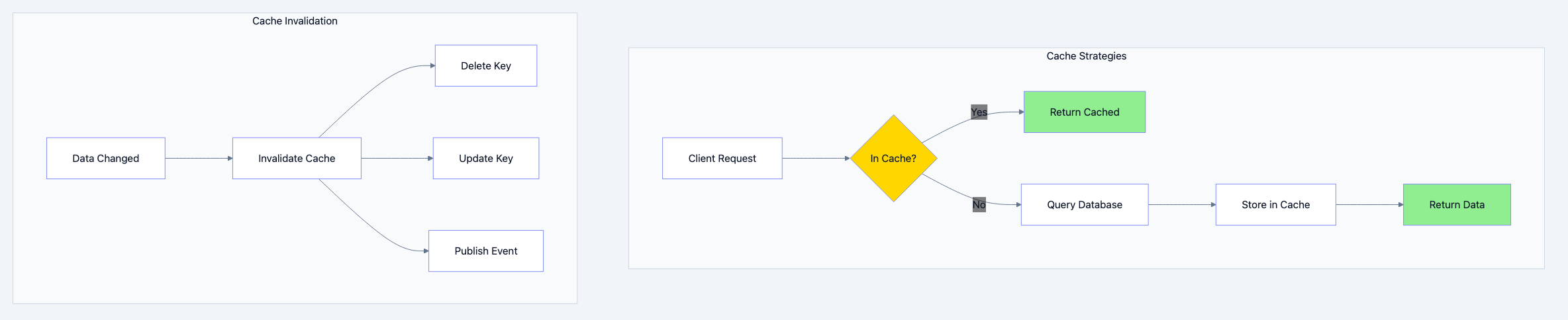
REST API architecture diagram 11
Cache Aside Pattern (Most Common)
💡 Think of it like this: Imagine a librarian (your API) and a desk (cache). When someone asks for a book (data), check the desk first. If it's there, hand it over immediately. If not, go to the storage room (database), get the book, leave a copy on the desk, and hand it to the person. Next time someone asks, it's right on the desk.
go// Filename: internal/repository/redis/cache.go
package redis

import (
    "context"
    "encoding/json"
    "fmt"
    "time"

    "github.com/redis/go-redis/v9"
)

// CacheConfig holds cache configuration
type CacheConfig struct {
    DefaultTTL time.Duration
    Prefix     string // e.g., "myapi:"
}

// Cache provides caching operations
// Why: Abstracting cache operations allows:
// 1. Switching cache backends (Redis, Memcached, in-memory)
// 2. Consistent serialization
// 3. Centralized TTL management
type Cache struct {
    client *redis.Client
    config CacheConfig
}

func NewCache(client *redis.Client, config CacheConfig) *Cache {
    return &Cache{
        client: client,
        config: config,
    }
}

// Get retrieves a value from cache
// Why: Returns found flag to distinguish "not found" from "found nil"
func (c *Cache) Get(ctx context.Context, key string, dest interface{}) (bool, error) {
    fullKey := c.config.Prefix + key

    val, err := c.client.Get(ctx, fullKey).Result()
    if err == redis.Nil {
        // Why: Cache miss is not an error
        return false, nil
    }
    if err != nil {
        return false, fmt.Errorf("cache get: %w", err)
    }

    // Why: Deserialize JSON into destination
    if err := json.Unmarshal([]byte(val), dest); err != nil {
        return false, fmt.Errorf("cache unmarshal: %w", err)
    }

    return true, nil
}

// Set stores a value in cache with TTL
// Why: TTL ensures stale data eventually expires
func (c *Cache) Set(ctx context.Context, key string, value interface{}, ttl time.Duration) error {
    fullKey := c.config.Prefix + key

    if ttl == 0 {
        ttl = c.config.DefaultTTL
    }

    // Why: Serialize to JSON for storage
    data, err := json.Marshal(value)
    if err != nil {
        return fmt.Errorf("cache marshal: %w", err)
    }

    if err := c.client.Set(ctx, fullKey, data, ttl).Err(); err != nil {
        return fmt.Errorf("cache set: %w", err)
    }

    return nil
}

// Delete removes a value from cache
// Why: Called when data is modified to prevent stale reads
func (c *Cache) Delete(ctx context.Context, keys ...string) error {
    if len(keys) == 0 {
        return nil
    }

    fullKeys := make([]string, len(keys))
    for i, key := range keys {
        fullKeys[i] = c.config.Prefix + key
    }

    if err := c.client.Del(ctx, fullKeys...).Err(); err != nil {
        return fmt.Errorf("cache delete: %w", err)
    }

    return nil
}

// DeletePattern removes all keys matching a pattern
// Why: Useful for invalidating related cache entries
// e.g., delete all user-related cache when user is deleted
func (c *Cache) DeletePattern(ctx context.Context, pattern string) error {
    fullPattern := c.config.Prefix + pattern

    // Why: SCAN is safer than KEYS for production
    // KEYS blocks Redis, SCAN iterates incrementally
    iter := c.client.Scan(ctx, 0, fullPattern, 100).Iterator()

    var keysToDelete []string
    for iter.Next(ctx) {
        keysToDelete = append(keysToDelete, iter.Val())
    }

    if err := iter.Err(); err != nil {
        return fmt.Errorf("cache scan: %w", err)
    }

    if len(keysToDelete) > 0 {
        if err := c.client.Del(ctx, keysToDelete...).Err(); err != nil {
            return fmt.Errorf("cache delete pattern: %w", err)
        }
    }

    return nil
}

// GetOrSet tries cache first, falls back to loader function
// Why: Common pattern - check cache, if miss, load and cache
func (c *Cache) GetOrSet(ctx context.Context, key string, dest interface{}, ttl time.Duration, loader func() (interface{}, error)) error {
    // Try cache first
    found, err := c.Get(ctx, key, dest)
    if err != nil {
        // Why: Log cache errors but don't fail - just go to loader
        // Cache is optimization, not requirement
    }
    if found {
        return nil
    }

    // Cache miss - load from source
    value, err := loader()
    if err != nil {
        return err
    }

    // Why: Store in cache for next time
    // Ignore cache set errors - data is still valid
    _ = c.Set(ctx, key, value, ttl)

    // Why: Copy loaded value to destination
    data, _ := json.Marshal(value)
    return json.Unmarshal(data, dest)
}
Cache Keys Best Practices
go// Filename: internal/repository/redis/keys.go
package redis

import (
    "fmt"
)

// CacheKeys generates consistent cache keys
// Why: Consistent key format prevents:
// 1. Key collisions between different data types
// 2. Difficulty debugging cache issues
// 3. Problems with cache invalidation
type CacheKeys struct{}

func NewCacheKeys() *CacheKeys {
    return &CacheKeys{}
}

// User returns cache key for a user
// Format: user:{id}
func (k *CacheKeys) User(id string) string {
    return fmt.Sprintf("user:%s", id)
}

// UserByEmail returns cache key for user by email lookup
// Format: user:email:{email}
func (k *CacheKeys) UserByEmail(email string) string {
    return fmt.Sprintf("user:email:%s", email)
}

// UserList returns cache key for user list
// Format: users:page:{page}:size:{size}
func (k *CacheKeys) UserList(page, size int) string {
    return fmt.Sprintf("users:page:%d:size:%d", page, size)
}

// UserPattern returns pattern for all user cache keys
// Why: Used for bulk invalidation when user data changes
func (k *CacheKeys) UserPattern(id string) string {
    return fmt.Sprintf("user:%s*", id)
}

// Order returns cache key for an order
func (k *CacheKeys) Order(id string) string {
    return fmt.Sprintf("order:%s", id)
}

// UserOrders returns cache key for user's orders
func (k *CacheKeys) UserOrders(userID string, page, size int) string {
    return fmt.Sprintf("user:%s:orders:page:%d:size:%d", userID, page, size)
}

// RateLimit returns cache key for rate limiting
func (k *CacheKeys) RateLimit(identifier string) string {
    return fmt.Sprintf("ratelimit:%s", identifier)
}

// Session returns cache key for user session
func (k *CacheKeys) Session(sessionID string) string {
    return fmt.Sprintf("session:%s", sessionID)
}
HTTP Caching Headers
go// Filename: internal/middleware/cache.go
package middleware

import (
    "fmt"
    "net/http"
    "time"
)

// CacheControl middleware adds cache headers
// Why: HTTP caching reduces server load and improves client performance
type CacheControl struct{}

func NewCacheControl() *CacheControl {
    return &CacheControl{}
}

// Public caches response for specified duration
// Why: Use for public data that can be cached by CDNs and browsers
func (c *CacheControl) Public(maxAge time.Duration) func(http.Handler) http.Handler {
    return func(next http.Handler) http.Handler {
        return http.HandlerFunc(func(w http.ResponseWriter, r *http.Request) {
            // Why: Only cache GET requests
            if r.Method == http.MethodGet {
                w.Header().Set("Cache-Control",
                    fmt.Sprintf("public, max-age=%d", int(maxAge.Seconds())))
            }
            next.ServeHTTP(w, r)
        })
    }
}

// Private caches response only in browser
// Why: Use for user-specific data that shouldn't be cached by CDNs
func (c *CacheControl) Private(maxAge time.Duration) func(http.Handler) http.Handler {
    return func(next http.Handler) http.Handler {
        return http.HandlerFunc(func(w http.ResponseWriter, r *http.Request) {
            if r.Method == http.MethodGet {
                w.Header().Set("Cache-Control",
                    fmt.Sprintf("private, max-age=%d", int(maxAge.Seconds())))
            }
            next.ServeHTTP(w, r)
        })
    }
}

// NoCache prevents caching
// Why: Use for sensitive or frequently changing data
func (c *CacheControl) NoCache() func(http.Handler) http.Handler {
    return func(next http.Handler) http.Handler {
        return http.HandlerFunc(func(w http.ResponseWriter, r *http.Request) {
            w.Header().Set("Cache-Control", "no-store, no-cache, must-revalidate")
            w.Header().Set("Pragma", "no-cache")
            w.Header().Set("Expires", "0")
            next.ServeHTTP(w, r)
        })
    }
}

// ETag adds ETag support for conditional requests
// Why: ETag allows "304 Not Modified" responses, saving bandwidth
func (c *CacheControl) WithETag(generator func(*http.Request) string) func(http.Handler) http.Handler {
    return func(next http.Handler) http.Handler {
        return http.HandlerFunc(func(w http.ResponseWriter, r *http.Request) {
            etag := generator(r)

            // Check if client has current version
            if match := r.Header.Get("If-None-Match"); match == etag {
                w.WriteHeader(http.StatusNotModified)
                return
            }

            w.Header().Set("ETag", etag)
            next.ServeHTTP(w, r)
        })
    }
}
Rate Limiting: Protecting Your Service
Rate limiting prevents abuse, ensures fair usage, and protects your service from being overwhelmed.
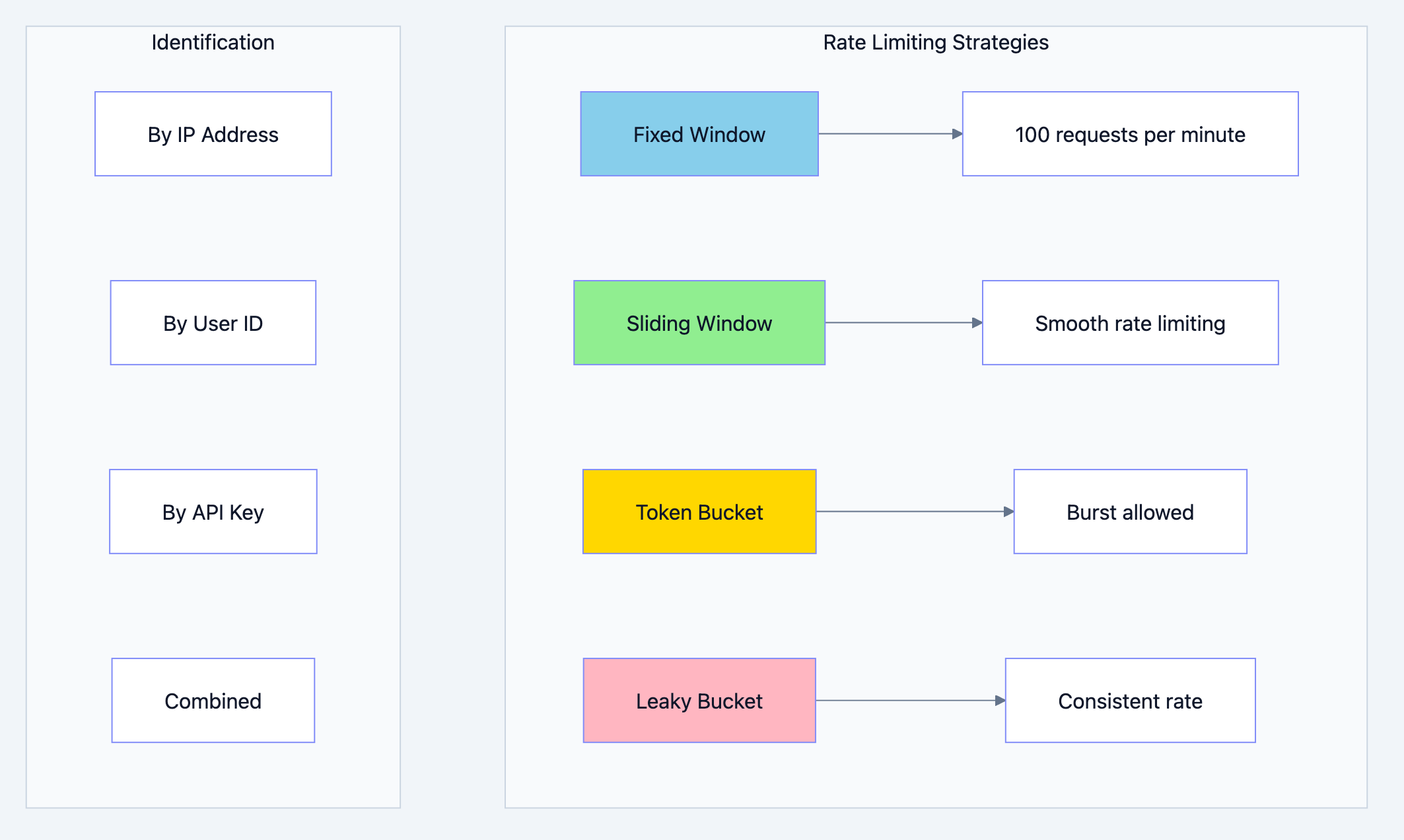
REST API architecture diagram 12
Token Bucket Rate Limiter
💡 Think of it like this: Imagine a bucket with tokens. Each request takes a token. Tokens are added at a fixed rate. If the bucket is empty, requests are rejected. If the bucket has tokens, requests proceed. The bucket has a maximum capacity, allowing bursts up to that limit.
go// Filename: internal/middleware/ratelimit.go
package middleware

import (
    "context"
    "net/http"
    "sync"
    "time"

    "myapi/internal/pkg/response"
)

// RateLimitConfig holds rate limiter configuration
type RateLimitConfig struct {
    RequestsPerSecond float64       // Rate at which tokens are added
    BurstSize         int           // Maximum tokens (allows bursts)
    CleanupInterval   time.Duration // How often to clean up old entries
}

// RateLimiter implements token bucket rate limiting
// Why: Token bucket allows bursts while maintaining average rate
type RateLimiter struct {
    config  RateLimitConfig
    buckets map[string]*bucket
    mu      sync.RWMutex
    stopCh  chan struct{}
}

type bucket struct {
    tokens     float64
    lastUpdate time.Time
}

func NewRateLimiter(config RateLimitConfig) *RateLimiter {
    rl := &RateLimiter{
        config:  config,
        buckets: make(map[string]*bucket),
        stopCh:  make(chan struct{}),
    }

    // Why: Periodic cleanup prevents memory leak from old entries
    go rl.cleanup()

    return rl
}

// Allow checks if request is allowed
// Why: Returns true if under rate limit, false if exceeded
func (rl *RateLimiter) Allow(key string) bool {
    rl.mu.Lock()
    defer rl.mu.Unlock()

    now := time.Now()

    b, exists := rl.buckets[key]
    if !exists {
        // New client - start with full bucket
        rl.buckets[key] = &bucket{
            tokens:     float64(rl.config.BurstSize) - 1, // -1 for this request
            lastUpdate: now,
        }
        return true
    }

    // Why: Calculate tokens to add based on time elapsed
    elapsed := now.Sub(b.lastUpdate).Seconds()
    b.tokens += elapsed * rl.config.RequestsPerSecond

    // Why: Cap at burst size
    if b.tokens > float64(rl.config.BurstSize) {
        b.tokens = float64(rl.config.BurstSize)
    }

    b.lastUpdate = now

    // Why: Check if we have a token available
    if b.tokens < 1 {
        return false
    }

    b.tokens--
    return true
}

// cleanup removes old bucket entries
func (rl *RateLimiter) cleanup() {
    ticker := time.NewTicker(rl.config.CleanupInterval)
    defer ticker.Stop()

    for {
        select {
        case <-ticker.C:
            rl.mu.Lock()
            now := time.Now()
            for key, b := range rl.buckets {
                // Why: Remove entries not updated in 2x cleanup interval
                if now.Sub(b.lastUpdate) > rl.config.CleanupInterval*2 {
                    delete(rl.buckets, key)
                }
            }
            rl.mu.Unlock()
        case <-rl.stopCh:
            return
        }
    }
}

// Stop stops the cleanup goroutine
func (rl *RateLimiter) Stop() {
    close(rl.stopCh)
}

// RateLimitMiddleware is HTTP middleware for rate limiting
type RateLimitMiddleware struct {
    limiter     *RateLimiter
    keyFunc     func(*http.Request) string
    config      RateLimitConfig
}

func NewRateLimitMiddleware(config RateLimitConfig, keyFunc func(*http.Request) string) *RateLimitMiddleware {
    return &RateLimitMiddleware{
        limiter: NewRateLimiter(config),
        keyFunc: keyFunc,
        config:  config,
    }
}

// Limit applies rate limiting to requests
// Why: Protects the service from abuse and ensures fair usage
func (m *RateLimitMiddleware) Limit(next http.Handler) http.Handler {
    return http.HandlerFunc(func(w http.ResponseWriter, r *http.Request) {
        key := m.keyFunc(r)

        if !m.limiter.Allow(key) {
            // Why: Set standard rate limit headers
            w.Header().Set("X-RateLimit-Limit", fmt.Sprintf("%d", m.config.BurstSize))
            w.Header().Set("X-RateLimit-Remaining", "0")
            w.Header().Set("Retry-After", "1")

            response.Error(w, http.StatusTooManyRequests,
                "Rate limit exceeded. Please try again later.")
            return
        }

        next.ServeHTTP(w, r)
    })
}

// Common key functions

// KeyByIP extracts client IP for rate limiting
// Why: Rate limit by IP for unauthenticated endpoints
func KeyByIP(r *http.Request) string {
    // Why: Check X-Forwarded-For for proxied requests
    if xff := r.Header.Get("X-Forwarded-For"); xff != "" {
        // First IP in the list is the original client
        return strings.Split(xff, ",")[0]
    }
    if xri := r.Header.Get("X-Real-IP"); xri != "" {
        return xri
    }
    // Why: RemoteAddr includes port, we only want IP
    host, _, _ := net.SplitHostPort(r.RemoteAddr)
    return host
}

// KeyByUserID extracts user ID for rate limiting
// Why: Rate limit by user for authenticated endpoints
func KeyByUserID(r *http.Request) string {
    if userID := GetUserID(r.Context()); userID != "" {
        return "user:" + userID
    }
    // Fallback to IP if not authenticated
    return "ip:" + KeyByIP(r)
}

// KeyByAPIKey extracts API key for rate limiting
// Why: Different API keys may have different rate limits
func KeyByAPIKey(r *http.Request) string {
    if apiKey := r.Header.Get("X-API-Key"); apiKey != "" {
        return "apikey:" + apiKey
    }
    return "ip:" + KeyByIP(r)
}
Redis Based Distributed Rate Limiting
go// Filename: internal/middleware/ratelimit_redis.go
package middleware

import (
    "context"
    "fmt"
    "net/http"
    "strconv"
    "time"

    "github.com/redis/go-redis/v9"
    "myapi/internal/pkg/response"
)

// RedisRateLimiter uses Redis for distributed rate limiting
// Why: In a multi-instance deployment, in-memory rate limiting
// doesn't work because each instance has its own counter.
// Redis provides a shared counter across all instances.
type RedisRateLimiter struct {
    client  *redis.Client
    config  RateLimitConfig
    keyFunc func(*http.Request) string
}

func NewRedisRateLimiter(client *redis.Client, config RateLimitConfig, keyFunc func(*http.Request) string) *RedisRateLimiter {
    return &RedisRateLimiter{
        client:  client,
        config:  config,
        keyFunc: keyFunc,
    }
}

// Limit applies distributed rate limiting
// Why: Uses Redis INCR with expiry for atomic rate limiting
func (m *RedisRateLimiter) Limit(next http.Handler) http.Handler {
    return http.HandlerFunc(func(w http.ResponseWriter, r *http.Request) {
        ctx := r.Context()
        key := "ratelimit:" + m.keyFunc(r)

        // Why: Use sliding window approach
        // Key format: ratelimit:{identifier}:{window}
        window := time.Now().Unix() / int64(m.config.Window.Seconds())
        windowKey := fmt.Sprintf("%s:%d", key, window)

        // Why: INCR is atomic, prevents race conditions
        count, err := m.client.Incr(ctx, windowKey).Result()
        if err != nil {
            // Why: On Redis error, allow request (fail open)
            // Alternative: fail closed (deny request)
            next.ServeHTTP(w, r)
            return
        }

        // Why: Set expiry only on first request in window
        if count == 1 {
            m.client.Expire(ctx, windowKey, m.config.Window*2)
        }

        // Why: Check if over limit
        remaining := m.config.BurstSize - int(count)
        if remaining < 0 {
            remaining = 0
        }

        // Why: Always set rate limit headers
        w.Header().Set("X-RateLimit-Limit", strconv.Itoa(m.config.BurstSize))
        w.Header().Set("X-RateLimit-Remaining", strconv.Itoa(remaining))
        w.Header().Set("X-RateLimit-Reset", strconv.FormatInt((window+1)*int64(m.config.Window.Seconds()), 10))

        if count > int64(m.config.BurstSize) {
            w.Header().Set("Retry-After", strconv.FormatInt(int64(m.config.Window.Seconds()), 10))
            response.Error(w, http.StatusTooManyRequests,
                "Rate limit exceeded. Please try again later.")
            return
        }

        next.ServeHTTP(w, r)
    })
}
Logging: Your Production Lifeline
When something goes wrong in production, logs are your only window into what happened. Good logging is the difference between a 5 minute fix and a 5 hour investigation.
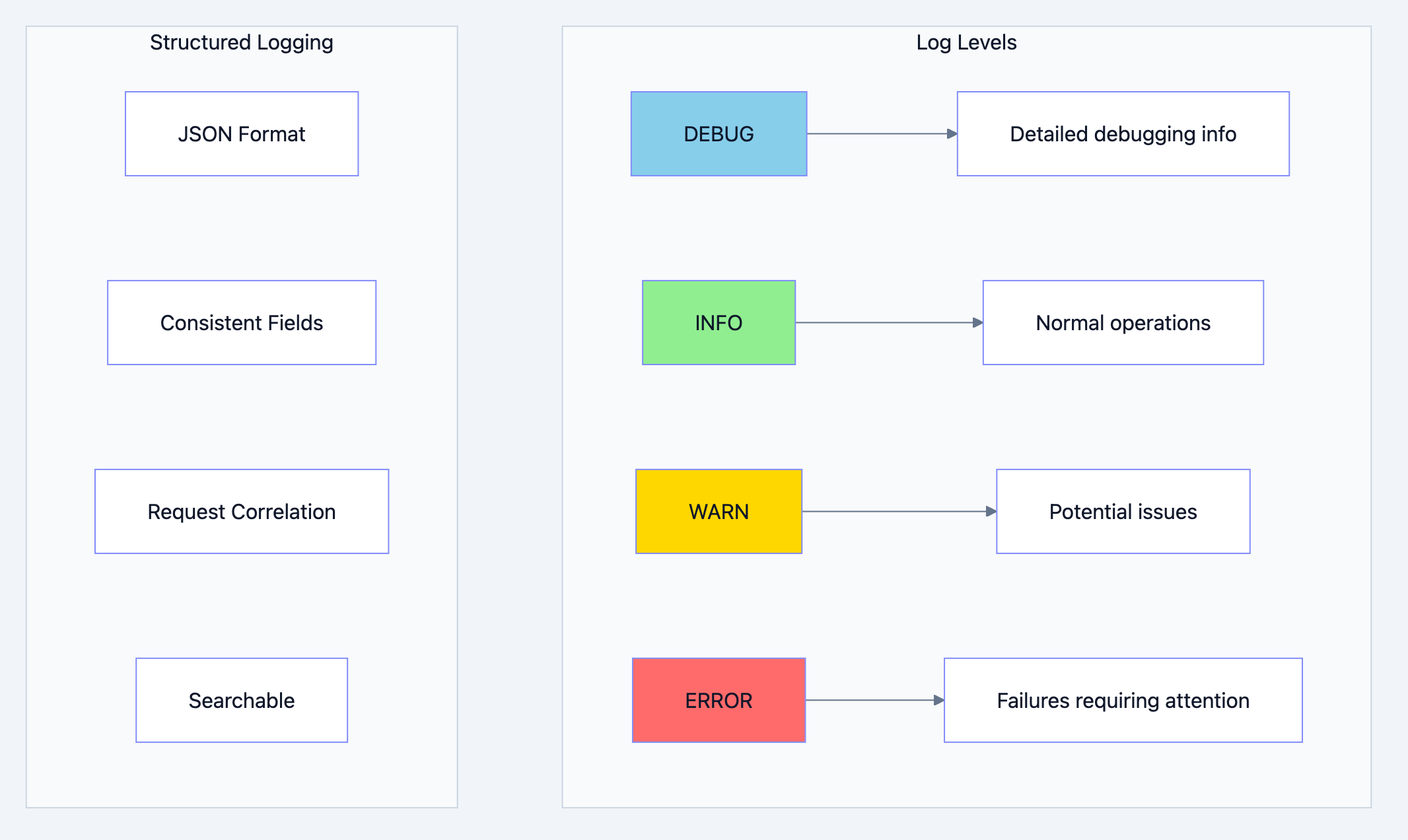
REST API architecture diagram 13
Production Logging Setup
go// Filename: internal/pkg/logger/logger.go
package logger

import (
    "context"
    "io"
    "log/slog"
    "os"
    "runtime"
    "time"
)

// LogConfig holds logger configuration
type LogConfig struct {
    Level      string // debug, info, warn, error
    Format     string // json, text
    Output     string // stdout, stderr, file path
    AddSource  bool   // Include source file and line
    TimeFormat string // Time format for text output
}

// NewLogger creates a configured slog.Logger
// Why: slog (Go 1.21+) is the standard structured logging library.
// It's fast, structured, and integrates well with observability tools.
func NewLogger(config LogConfig) (*slog.Logger, error) {
    // Parse log level
    var level slog.Level
    switch config.Level {
    case "debug":
        level = slog.LevelDebug
    case "info":
        level = slog.LevelInfo
    case "warn":
        level = slog.LevelWarn
    case "error":
        level = slog.LevelError
    default:
        level = slog.LevelInfo
    }

    // Configure output
    var output io.Writer
    switch config.Output {
    case "stdout", "":
        output = os.Stdout
    case "stderr":
        output = os.Stderr
    default:
        file, err := os.OpenFile(config.Output, os.O_CREATE|os.O_WRONLY|os.O_APPEND, 0666)
        if err != nil {
            return nil, err
        }
        output = file
    }

    // Configure handler options
    opts := &slog.HandlerOptions{
        Level:     level,
        AddSource: config.AddSource,
        // Why: Replace time format for readability in text mode
        ReplaceAttr: func(groups []string, a slog.Attr) slog.Attr {
            if a.Key == slog.TimeKey && config.Format == "text" {
                return slog.String(slog.TimeKey, a.Value.Time().Format(time.RFC3339))
            }
            return a
        },
    }

    // Create handler based on format
    var handler slog.Handler
    switch config.Format {
    case "json":
        // Why: JSON is machine-parseable, ideal for log aggregation
        handler = slog.NewJSONHandler(output, opts)
    default:
        // Why: Text is human-readable, ideal for development
        handler = slog.NewTextHandler(output, opts)
    }

    return slog.New(handler), nil
}

// Context keys for logging
type ctxKey string

const (
    RequestIDKey ctxKey = "request_id"
    UserIDKey    ctxKey = "user_id"
    TraceIDKey   ctxKey = "trace_id"
    SpanIDKey    ctxKey = "span_id"
)

// WithRequestID adds request ID to context
func WithRequestID(ctx context.Context, requestID string) context.Context {
    return context.WithValue(ctx, RequestIDKey, requestID)
}

// WithUserID adds user ID to context
func WithUserID(ctx context.Context, userID string) context.Context {
    return context.WithValue(ctx, UserIDKey, userID)
}

// FromContext creates a logger with context values
// Why: Automatically includes request_id, user_id, etc. in all logs
func FromContext(ctx context.Context, base *slog.Logger) *slog.Logger {
    logger := base

    if requestID, ok := ctx.Value(RequestIDKey).(string); ok && requestID != "" {
        logger = logger.With("request_id", requestID)
    }

    if userID, ok := ctx.Value(UserIDKey).(string); ok && userID != "" {
        logger = logger.With("user_id", userID)
    }

    if traceID, ok := ctx.Value(TraceIDKey).(string); ok && traceID != "" {
        logger = logger.With("trace_id", traceID)
    }

    return logger
}

// LogError logs an error with stack trace
// Why: Stack traces help identify where errors originate
func LogError(logger *slog.Logger, msg string, err error, args ...any) {
    // Get caller info
    _, file, line, _ := runtime.Caller(1)

    allArgs := append([]any{
        "error", err.Error(),
        "file", file,
        "line", line,
    }, args...)

    logger.Error(msg, allArgs...)
}
What to Log
go// Filename: internal/middleware/request_logger.go
package middleware

import (
    "log/slog"
    "net/http"
    "time"

    "myapi/internal/pkg/logger"
)

// RequestLogger logs HTTP requests with detailed information
// Why: Request logs are essential for:
// 1. Debugging issues
// 2. Performance monitoring
// 3. Security auditing
// 4. Usage analytics
type RequestLogger struct {
    logger *slog.Logger
}

func NewRequestLogger(l *slog.Logger) *RequestLogger {
    return &RequestLogger{logger: l}
}

func (m *RequestLogger) Log(next http.Handler) http.Handler {
    return http.HandlerFunc(func(w http.ResponseWriter, r *http.Request) {
        start := time.Now()

        // Generate request ID
        requestID := r.Header.Get("X-Request-ID")
        if requestID == "" {
            requestID = generateUUID()
        }

        // Add request ID to context
        ctx := logger.WithRequestID(r.Context(), requestID)
        r = r.WithContext(ctx)

        // Set request ID header for client correlation
        w.Header().Set("X-Request-ID", requestID)

        // Wrap response writer to capture status and size
        wrapped := wrapResponseWriter(w)

        // Why: Log request start for long-running request debugging
        m.logger.Debug("request started",
            "request_id", requestID,
            "method", r.Method,
            "path", r.URL.Path,
            "query", r.URL.RawQuery,
            "remote_addr", r.RemoteAddr,
            "user_agent", r.UserAgent(),
        )

        // Process request
        next.ServeHTTP(wrapped, r)

        // Calculate duration
        duration := time.Since(start)

        // Why: Log based on status code
        // Errors get ERROR level for alerting
        logLevel := slog.LevelInfo
        if wrapped.status >= 500 {
            logLevel = slog.LevelError
        } else if wrapped.status >= 400 {
            logLevel = slog.LevelWarn
        }

        // Why: Include all relevant fields for debugging and monitoring
        m.logger.Log(r.Context(), logLevel, "request completed",
            "request_id", requestID,
            "method", r.Method,
            "path", r.URL.Path,
            "status", wrapped.status,
            "duration_ms", duration.Milliseconds(),
            "size_bytes", wrapped.size,
            "remote_addr", r.RemoteAddr,
        )
    })
}
Log Sampling for High Traffic
go// Filename: internal/pkg/logger/sampler.go
package logger

import (
    "log/slog"
    "math/rand"
    "sync/atomic"
    "time"
)

// SampledLogger logs only a sample of messages
// Why: High-traffic systems can generate millions of logs per minute.
// Sampling reduces log volume while maintaining visibility.
type SampledLogger struct {
    base        *slog.Logger
    sampleRate  float64 // 0.0 to 1.0
    counter     uint64
    everyN      uint64 // Log every N messages
}

func NewSampledLogger(base *slog.Logger, sampleRate float64) *SampledLogger {
    return &SampledLogger{
        base:       base,
        sampleRate: sampleRate,
        everyN:     uint64(1.0 / sampleRate),
    }
}

// ShouldLog determines if this message should be logged
// Why: Uses deterministic sampling (every N) for consistent behavior
func (s *SampledLogger) ShouldLog() bool {
    count := atomic.AddUint64(&s.counter, 1)
    return count%s.everyN == 0
}

// Info logs info message with sampling
func (s *SampledLogger) Info(msg string, args ...any) {
    if s.ShouldLog() {
        s.base.Info(msg, append(args, "sampled", true)...)
    }
}

// Debug logs debug message with sampling
func (s *SampledLogger) Debug(msg string, args ...any) {
    if s.ShouldLog() {
        s.base.Debug(msg, append(args, "sampled", true)...)
    }
}

// Error always logs (no sampling for errors)
// Why: Errors are critical and should never be sampled
func (s *SampledLogger) Error(msg string, args ...any) {
    s.base.Error(msg, args...)
}

// Warn always logs (no sampling for warnings)
func (s *SampledLogger) Warn(msg string, args ...any) {
    s.base.Warn(msg, args...)
}
Monitoring and Observability
Observability is the ability to understand what's happening inside your system by looking at its outputs. It's built on three pillars: metrics, logs, and traces.
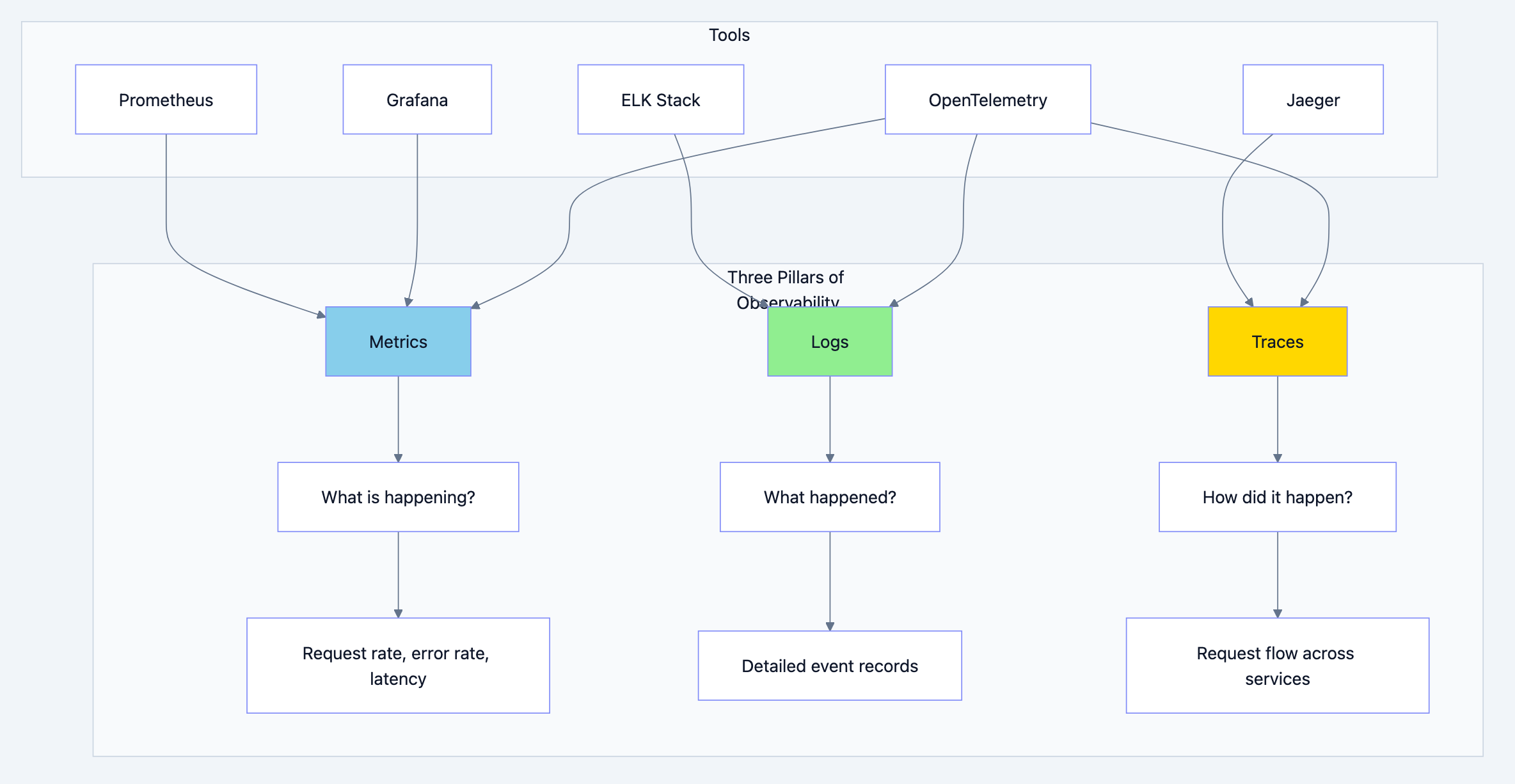
REST API architecture diagram 14
Prometheus Metrics
go// Filename: internal/metrics/metrics.go
package metrics

import (
    "github.com/prometheus/client_golang/prometheus"
    "github.com/prometheus/client_golang/prometheus/promauto"
)

// Metrics holds all application metrics
// Why: Centralizing metrics makes them easy to find and manage
type Metrics struct {
    // Request metrics
    RequestsTotal    *prometheus.CounterVec
    RequestDuration  *prometheus.HistogramVec
    RequestsInFlight prometheus.Gauge

    // Business metrics
    UsersCreated   prometheus.Counter
    OrdersCreated  prometheus.Counter
    OrdersTotal    *prometheus.CounterVec

    // Database metrics
    DBQueryDuration  *prometheus.HistogramVec
    DBConnectionsOpen prometheus.Gauge
    DBConnectionsIdle prometheus.Gauge

    // Cache metrics
    CacheHits   *prometheus.CounterVec
    CacheMisses *prometheus.CounterVec
}

// NewMetrics creates and registers all metrics
// Why: promauto automatically registers metrics with the default registry
func NewMetrics() *Metrics {
    return &Metrics{
        // Why: Count total requests by method, path, and status
        RequestsTotal: promauto.NewCounterVec(
            prometheus.CounterOpts{
                Name: "http_requests_total",
                Help: "Total number of HTTP requests",
            },
            []string{"method", "path", "status"},
        ),

        // Why: Histogram for request duration with percentiles
        // Buckets are in seconds: 5ms, 10ms, 25ms, 50ms, 100ms, 250ms, 500ms, 1s, 2.5s, 5s, 10s
        RequestDuration: promauto.NewHistogramVec(
            prometheus.HistogramOpts{
                Name:    "http_request_duration_seconds",
                Help:    "HTTP request duration in seconds",
                Buckets: []float64{.005, .01, .025, .05, .1, .25, .5, 1, 2.5, 5, 10},
            },
            []string{"method", "path"},
        ),

        // Why: Gauge for current in-flight requests (concurrency)
        RequestsInFlight: promauto.NewGauge(
            prometheus.GaugeOpts{
                Name: "http_requests_in_flight",
                Help: "Number of HTTP requests currently being processed",
            },
        ),

        // Why: Business metrics help understand application usage
        UsersCreated: promauto.NewCounter(
            prometheus.CounterOpts{
                Name: "users_created_total",
                Help: "Total number of users created",
            },
        ),

        OrdersCreated: promauto.NewCounter(
            prometheus.CounterOpts{
                Name: "orders_created_total",
                Help: "Total number of orders created",
            },
        ),

        OrdersTotal: promauto.NewCounterVec(
            prometheus.CounterOpts{
                Name: "orders_total",
                Help: "Total orders by status",
            },
            []string{"status"},
        ),

        // Why: Database metrics identify bottlenecks
        DBQueryDuration: promauto.NewHistogramVec(
            prometheus.HistogramOpts{
                Name:    "db_query_duration_seconds",
                Help:    "Database query duration in seconds",
                Buckets: []float64{.001, .005, .01, .025, .05, .1, .25, .5, 1},
            },
            []string{"query_type"},
        ),

        DBConnectionsOpen: promauto.NewGauge(
            prometheus.GaugeOpts{
                Name: "db_connections_open",
                Help: "Number of open database connections",
            },
        ),

        DBConnectionsIdle: promauto.NewGauge(
            prometheus.GaugeOpts{
                Name: "db_connections_idle",
                Help: "Number of idle database connections",
            },
        ),

        // Why: Cache metrics show cache effectiveness
        CacheHits: promauto.NewCounterVec(
            prometheus.CounterOpts{
                Name: "cache_hits_total",
                Help: "Total cache hits",
            },
            []string{"cache"},
        ),

        CacheMisses: promauto.NewCounterVec(
            prometheus.CounterOpts{
                Name: "cache_misses_total",
                Help: "Total cache misses",
            },
            []string{"cache"},
        ),
    }
}
Metrics Middleware
go// Filename: internal/middleware/metrics.go
package middleware

import (
    "net/http"
    "strconv"
    "time"

    "myapi/internal/metrics"
)

// MetricsMiddleware collects HTTP metrics
type MetricsMiddleware struct {
    metrics *metrics.Metrics
}

func NewMetricsMiddleware(m *metrics.Metrics) *MetricsMiddleware {
    return &MetricsMiddleware{metrics: m}
}

func (m *MetricsMiddleware) Collect(next http.Handler) http.Handler {
    return http.HandlerFunc(func(w http.ResponseWriter, r *http.Request) {
        start := time.Now()

        // Track in-flight requests
        m.metrics.RequestsInFlight.Inc()
        defer m.metrics.RequestsInFlight.Dec()

        // Wrap response writer to capture status
        wrapped := wrapResponseWriter(w)

        // Process request
        next.ServeHTTP(wrapped, r)

        // Record metrics
        duration := time.Since(start).Seconds()
        status := strconv.Itoa(wrapped.status)

        // Why: Use path template, not actual path, to avoid high cardinality
        // /users/123 becomes /users/{id}
        path := r.URL.Path // In production, normalize this

        m.metrics.RequestsTotal.WithLabelValues(r.Method, path, status).Inc()
        m.metrics.RequestDuration.WithLabelValues(r.Method, path).Observe(duration)
    })
}
Health Check Endpoints
go// Filename: internal/handler/health_handler.go
package handler

import (
    "context"
    "database/sql"
    "encoding/json"
    "net/http"
    "time"

    "github.com/redis/go-redis/v9"
)

// HealthHandler provides health check endpoints
type HealthHandler struct {
    db    *sql.DB
    redis *redis.Client
}

func NewHealthHandler(db *sql.DB, redis *redis.Client) *HealthHandler {
    return &HealthHandler{db: db, redis: redis}
}

// HealthResponse represents health check response
type HealthResponse struct {
    Status    string            `json:"status"`
    Timestamp string            `json:"timestamp"`
    Checks    map[string]Check  `json:"checks,omitempty"`
}

type Check struct {
    Status   string `json:"status"`
    Message  string `json:"message,omitempty"`
    Duration string `json:"duration,omitempty"`
}

// Health is the basic health check (liveness probe)
// Why: Kubernetes uses this to know if the container is alive
// Should be fast and always succeed if the process is running
func (h *HealthHandler) Health(w http.ResponseWriter, r *http.Request) {
    w.Header().Set("Content-Type", "application/json")
    w.WriteHeader(http.StatusOK)

    json.NewEncoder(w).Encode(HealthResponse{
        Status:    "healthy",
        Timestamp: time.Now().UTC().Format(time.RFC3339),
    })
}

// Ready is the detailed health check (readiness probe)
// Why: Kubernetes uses this to know if the container can accept traffic
// Checks all dependencies (database, cache, etc.)
func (h *HealthHandler) Ready(w http.ResponseWriter, r *http.Request) {
    ctx, cancel := context.WithTimeout(r.Context(), 5*time.Second)
    defer cancel()

    checks := make(map[string]Check)
    allHealthy := true

    // Check database
    dbCheck := h.checkDatabase(ctx)
    checks["database"] = dbCheck
    if dbCheck.Status != "healthy" {
        allHealthy = false
    }

    // Check Redis
    redisCheck := h.checkRedis(ctx)
    checks["redis"] = redisCheck
    if redisCheck.Status != "healthy" {
        allHealthy = false
    }

    // Build response
    resp := HealthResponse{
        Timestamp: time.Now().UTC().Format(time.RFC3339),
        Checks:    checks,
    }

    w.Header().Set("Content-Type", "application/json")

    if allHealthy {
        resp.Status = "healthy"
        w.WriteHeader(http.StatusOK)
    } else {
        resp.Status = "unhealthy"
        w.WriteHeader(http.StatusServiceUnavailable)
    }

    json.NewEncoder(w).Encode(resp)
}

func (h *HealthHandler) checkDatabase(ctx context.Context) Check {
    start := time.Now()

    if err := h.db.PingContext(ctx); err != nil {
        return Check{
            Status:  "unhealthy",
            Message: err.Error(),
        }
    }

    return Check{
        Status:   "healthy",
        Duration: time.Since(start).String(),
    }
}

func (h *HealthHandler) checkRedis(ctx context.Context) Check {
    start := time.Now()

    if err := h.redis.Ping(ctx).Err(); err != nil {
        return Check{
            Status:  "unhealthy",
            Message: err.Error(),
        }
    }

    return Check{
        Status:   "healthy",
        Duration: time.Since(start).String(),
    }
}
HATEOAS: Self Documenting APIs
HATEOAS (Hypermedia As The Engine Of Application State) makes your API self-documenting by including links to related resources and available actions.
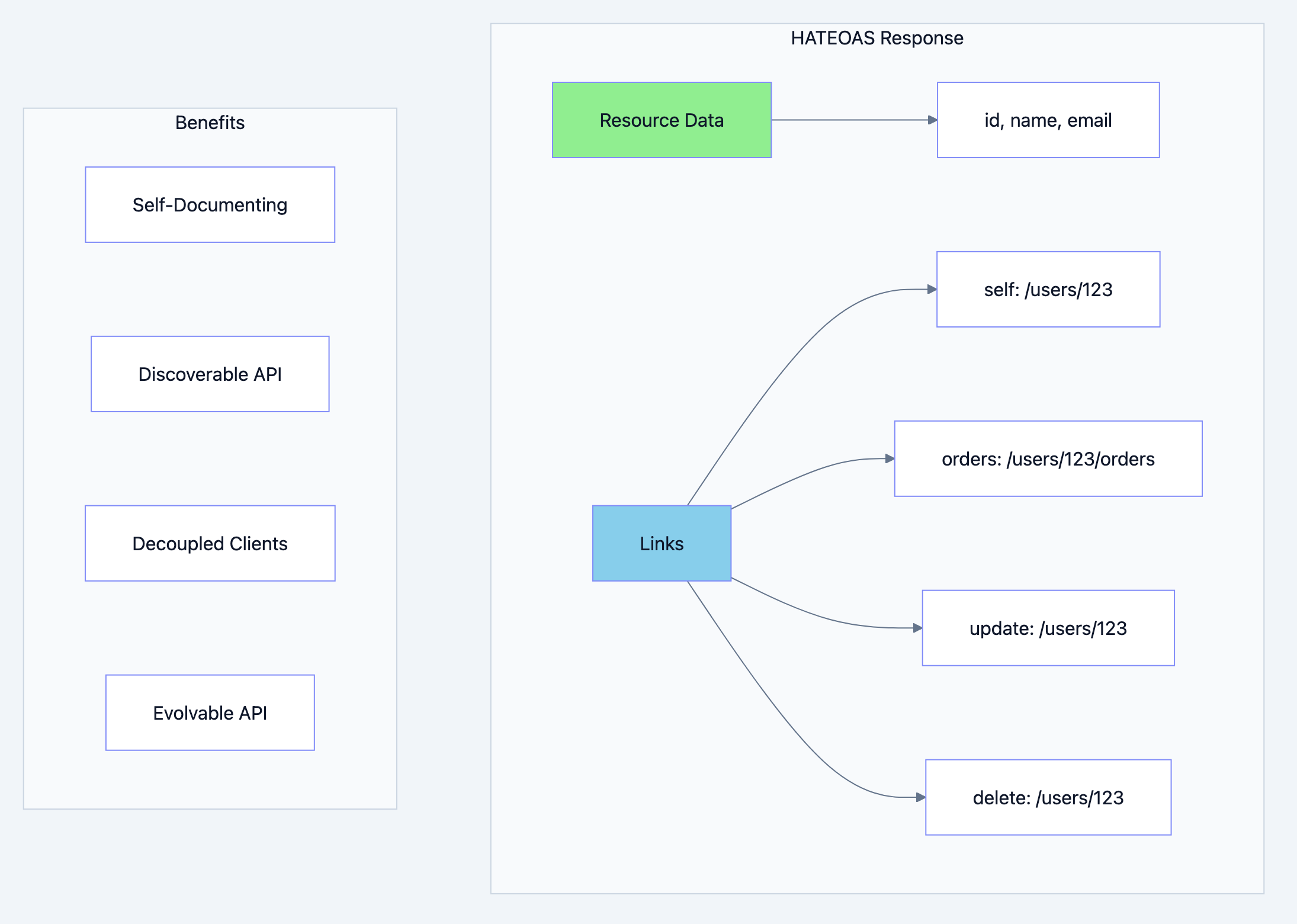
REST API architecture diagram 15
go// Filename: internal/pkg/response/hateoas.go
package response

import (
    "fmt"
    "net/http"
)

// Link represents a HATEOAS link
type Link struct {
    Href   string `json:"href"`
    Rel    string `json:"rel"`
    Method string `json:"method"`
}

// Resource wraps a resource with HATEOAS links
// Why: Adding links makes the API self-documenting
// Clients can discover available actions without hardcoding URLs
type Resource struct {
    Data  interface{} `json:"data"`
    Links []Link      `json:"_links"`
}

// LinkBuilder helps construct HATEOAS links
type LinkBuilder struct {
    baseURL string
}

func NewLinkBuilder(baseURL string) *LinkBuilder {
    return &LinkBuilder{baseURL: baseURL}
}

// UserLinks generates links for a user resource
// Why: Centralize link generation for consistency
func (b *LinkBuilder) UserLinks(userID string) []Link {
    return []Link{
        {
            Href:   fmt.Sprintf("%s/api/v1/users/%s", b.baseURL, userID),
            Rel:    "self",
            Method: http.MethodGet,
        },
        {
            Href:   fmt.Sprintf("%s/api/v1/users/%s", b.baseURL, userID),
            Rel:    "update",
            Method: http.MethodPatch,
        },
        {
            Href:   fmt.Sprintf("%s/api/v1/users/%s", b.baseURL, userID),
            Rel:    "delete",
            Method: http.MethodDelete,
        },
        {
            Href:   fmt.Sprintf("%s/api/v1/users/%s/orders", b.baseURL, userID),
            Rel:    "orders",
            Method: http.MethodGet,
        },
    }
}

// CollectionLinks generates links for a collection
func (b *LinkBuilder) CollectionLinks(resource string, page, pageSize, totalPages int) []Link {
    links := []Link{
        {
            Href:   fmt.Sprintf("%s/api/v1/%s?page=%d&size=%d", b.baseURL, resource, page, pageSize),
            Rel:    "self",
            Method: http.MethodGet,
        },
    }

    if page > 1 {
        links = append(links, Link{
            Href:   fmt.Sprintf("%s/api/v1/%s?page=%d&size=%d", b.baseURL, resource, page-1, pageSize),
            Rel:    "prev",
            Method: http.MethodGet,
        })
        links = append(links, Link{
            Href:   fmt.Sprintf("%s/api/v1/%s?page=1&size=%d", b.baseURL, resource, pageSize),
            Rel:    "first",
            Method: http.MethodGet,
        })
    }

    if page < totalPages {
        links = append(links, Link{
            Href:   fmt.Sprintf("%s/api/v1/%s?page=%d&size=%d", b.baseURL, resource, page+1, pageSize),
            Rel:    "next",
            Method: http.MethodGet,
        })
        links = append(links, Link{
            Href:   fmt.Sprintf("%s/api/v1/%s?page=%d&size=%d", b.baseURL, resource, totalPages, pageSize),
            Rel:    "last",
            Method: http.MethodGet,
        })
    }

    return links
}

// OrderLinks generates links for an order resource
func (b *LinkBuilder) OrderLinks(orderID, userID string, status string) []Link {
    links := []Link{
        {
            Href:   fmt.Sprintf("%s/api/v1/orders/%s", b.baseURL, orderID),
            Rel:    "self",
            Method: http.MethodGet,
        },
        {
            Href:   fmt.Sprintf("%s/api/v1/users/%s", b.baseURL, userID),
            Rel:    "customer",
            Method: http.MethodGet,
        },
        {
            Href:   fmt.Sprintf("%s/api/v1/orders/%s/items", b.baseURL, orderID),
            Rel:    "items",
            Method: http.MethodGet,
        },
    }

    // Why: Only include cancel link if order can be cancelled
    if status == "pending" || status == "processing" {
        links = append(links, Link{
            Href:   fmt.Sprintf("%s/api/v1/orders/%s/cancel", b.baseURL, orderID),
            Rel:    "cancel",
            Method: http.MethodPost,
        })
    }

    return links
}
Example HATEOAS Response:
json{
    "success": true,
    "data": {
        "id": "123",
        "email": "john@example.com",
        "name": "John Doe",
        "role": "user"
    },
    "_links": [
        {"href": "/api/v1/users/123", "rel": "self", "method": "GET"},
        {"href": "/api/v1/users/123", "rel": "update", "method": "PATCH"},
        {"href": "/api/v1/users/123", "rel": "delete", "method": "DELETE"},
        {"href": "/api/v1/users/123/orders", "rel": "orders", "method": "GET"}
    ]
}
API Versioning
APIs evolve. Versioning allows you to make breaking changes without breaking existing clients.
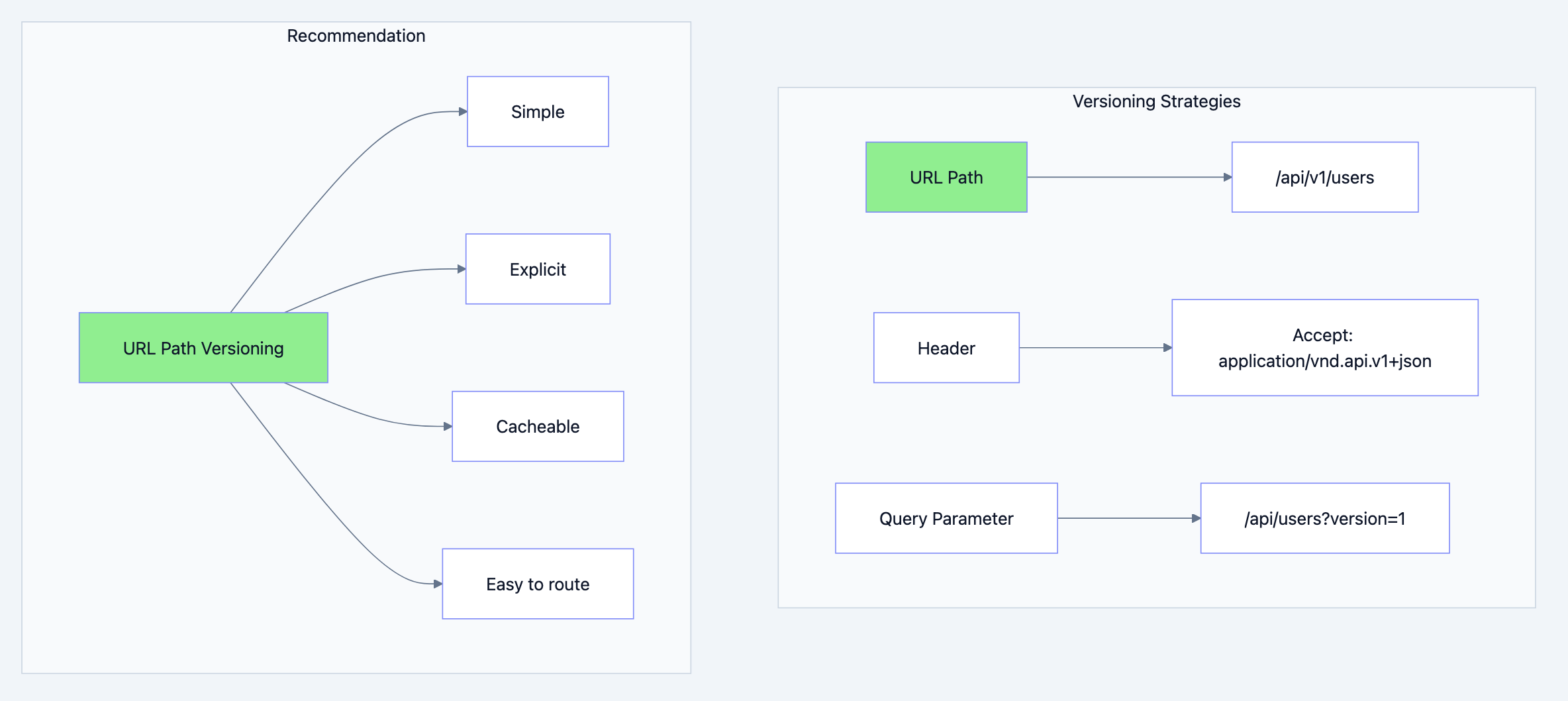
REST API architecture diagram 16
Version Handling
go// Filename: internal/router/versioned_router.go
package router

import (
    "net/http"
    "strings"
)

// VersionedRouter routes requests to version-specific handlers
// Why: Allows maintaining multiple API versions simultaneously
type VersionedRouter struct {
    handlers map[string]http.Handler
    default  http.Handler
}

func NewVersionedRouter() *VersionedRouter {
    return &VersionedRouter{
        handlers: make(map[string]http.Handler),
    }
}

// Register registers a handler for a specific version
func (r *VersionedRouter) Register(version string, handler http.Handler) {
    r.handlers[version] = handler
}

// SetDefault sets the default handler for unknown versions
func (r *VersionedRouter) SetDefault(handler http.Handler) {
    r.default = handler
}

// ServeHTTP routes to the appropriate version
func (r *VersionedRouter) ServeHTTP(w http.ResponseWriter, req *http.Request) {
    // Extract version from URL path
    // /api/v1/users -> v1
    parts := strings.Split(req.URL.Path, "/")
    version := ""
    for _, part := range parts {
        if strings.HasPrefix(part, "v") && len(part) >= 2 {
            version = part
            break
        }
    }

    // Find handler for version
    if handler, ok := r.handlers[version]; ok {
        handler.ServeHTTP(w, req)
        return
    }

    // Use default handler
    if r.default != nil {
        r.default.ServeHTTP(w, req)
        return
    }

    http.NotFound(w, req)
}
Deprecation Headers
go// Filename: internal/middleware/deprecation.go
package middleware

import (
    "net/http"
    "time"
)

// DeprecationMiddleware adds deprecation headers
// Why: Warn clients about deprecated API versions
type DeprecationMiddleware struct {
    deprecatedVersions map[string]time.Time // version -> sunset date
}

func NewDeprecationMiddleware() *DeprecationMiddleware {
    return &DeprecationMiddleware{
        deprecatedVersions: make(map[string]time.Time),
    }
}

// Deprecate marks a version as deprecated
func (m *DeprecationMiddleware) Deprecate(version string, sunsetDate time.Time) {
    m.deprecatedVersions[version] = sunsetDate
}

func (m *DeprecationMiddleware) Handle(next http.Handler) http.Handler {
    return http.HandlerFunc(func(w http.ResponseWriter, r *http.Request) {
        // Extract version from path
        version := extractVersion(r.URL.Path)

        if sunsetDate, deprecated := m.deprecatedVersions[version]; deprecated {
            // Why: Standard deprecation headers
            w.Header().Set("Deprecation", "true")
            w.Header().Set("Sunset", sunsetDate.Format(time.RFC1123))
            w.Header().Set("Link", "</api/v2>; rel=\"successor-version\"")
        }

        next.ServeHTTP(w, r)
    })
}

func extractVersion(path string) string {
    // Simple extraction - in production use proper parsing
    if strings.Contains(path, "/v1/") {
        return "v1"
    }
    if strings.Contains(path, "/v2/") {
        return "v2"
    }
    return ""
}
Testing Production APIs
Testing is not optional for production APIs. A comprehensive test suite gives you confidence to deploy.
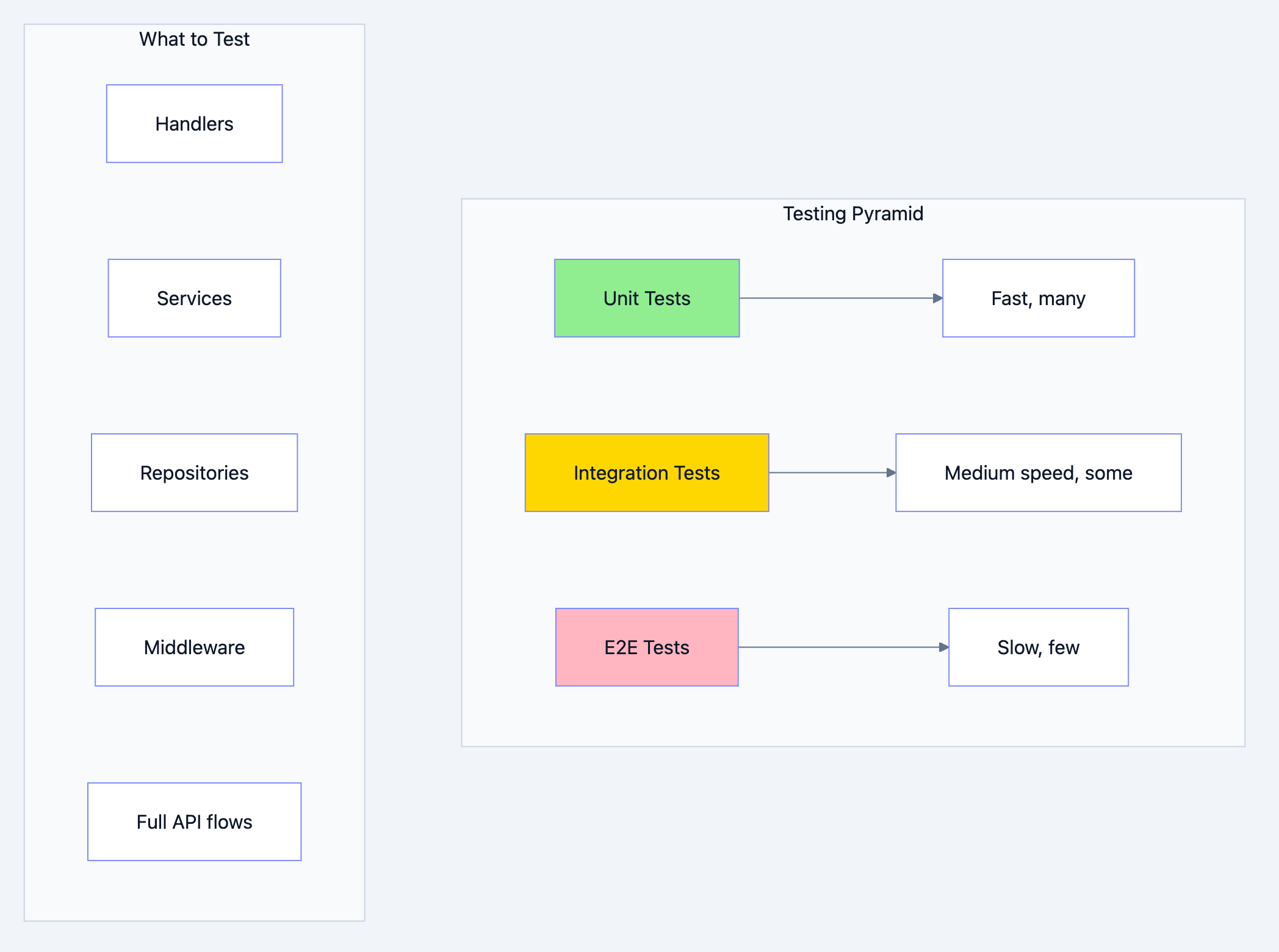
REST API architecture diagram 17
Handler Testing
go// Filename: internal/handler/user_handler_test.go
package handler_test

import (
    "bytes"
    "encoding/json"
    "net/http"
    "net/http/httptest"
    "testing"

    "myapi/internal/domain/user"
    "myapi/internal/handler"
)

// MockUserService is a mock implementation of user.Service
// Why: Mocks isolate handler tests from service logic
type MockUserService struct {
    CreateUserFunc func(ctx context.Context, email, name, password, role string) (*user.User, error)
    GetUserFunc    func(ctx context.Context, id string) (*user.User, error)
}

func (m *MockUserService) CreateUser(ctx context.Context, email, name, password, role string) (*user.User, error) {
    return m.CreateUserFunc(ctx, email, name, password, role)
}

func (m *MockUserService) GetUser(ctx context.Context, id string) (*user.User, error) {
    return m.GetUserFunc(ctx, id)
}

func TestCreateUser_Success(t *testing.T) {
    // Arrange
    mockService := &MockUserService{
        CreateUserFunc: func(ctx context.Context, email, name, password, role string) (*user.User, error) {
            return &user.User{
                ID:    "123",
                Email: email,
                Name:  name,
                Role:  user.Role(role),
            }, nil
        },
    }

    h := handler.NewUserHandler(mockService)

    body := `{"email":"test@example.com","name":"Test User","password":"Password123!","role":"user"}`
    req := httptest.NewRequest(http.MethodPost, "/api/v1/users", bytes.NewBufferString(body))
    req.Header.Set("Content-Type", "application/json")

    rec := httptest.NewRecorder()

    // Act
    h.CreateUser(rec, req)

    // Assert
    if rec.Code != http.StatusCreated {
        t.Errorf("expected status %d, got %d", http.StatusCreated, rec.Code)
    }

    var resp map[string]interface{}
    json.NewDecoder(rec.Body).Decode(&resp)

    if resp["success"] != true {
        t.Error("expected success to be true")
    }

    data := resp["data"].(map[string]interface{})
    if data["email"] != "test@example.com" {
        t.Errorf("expected email test@example.com, got %s", data["email"])
    }
}

func TestCreateUser_ValidationError(t *testing.T) {
    // Arrange
    h := handler.NewUserHandler(&MockUserService{})

    // Missing required fields
    body := `{"email":"invalid-email"}`
    req := httptest.NewRequest(http.MethodPost, "/api/v1/users", bytes.NewBufferString(body))
    req.Header.Set("Content-Type", "application/json")

    rec := httptest.NewRecorder()

    // Act
    h.CreateUser(rec, req)

    // Assert
    if rec.Code != http.StatusUnprocessableEntity {
        t.Errorf("expected status %d, got %d", http.StatusUnprocessableEntity, rec.Code)
    }
}

func TestGetUser_NotFound(t *testing.T) {
    // Arrange
    mockService := &MockUserService{
        GetUserFunc: func(ctx context.Context, id string) (*user.User, error) {
            return nil, apperrors.NotFound("User")
        },
    }

    h := handler.NewUserHandler(mockService)

    req := httptest.NewRequest(http.MethodGet, "/api/v1/users/nonexistent", nil)
    req.SetPathValue("id", "nonexistent") // Go 1.22+

    rec := httptest.NewRecorder()

    // Act
    h.GetUser(rec, req)

    // Assert
    if rec.Code != http.StatusNotFound {
        t.Errorf("expected status %d, got %d", http.StatusNotFound, rec.Code)
    }
}
Integration Testing
go// Filename: internal/handler/integration_test.go
package handler_test

import (
    "bytes"
    "context"
    "encoding/json"
    "net/http"
    "net/http/httptest"
    "testing"

    "myapi/internal/config"
    "myapi/internal/router"
)

// TestIntegration_UserCRUD tests the complete user CRUD flow
// Why: Integration tests verify all components work together
func TestIntegration_UserCRUD(t *testing.T) {
    if testing.Short() {
        t.Skip("skipping integration test")
    }

    // Setup
    cfg := config.LoadTestConfig()
    app, cleanup := setupTestApp(cfg)
    defer cleanup()

    server := httptest.NewServer(app.Router)
    defer server.Close()

    var userID string

    // Test Create
    t.Run("Create User", func(t *testing.T) {
        body := `{"email":"integration@test.com","name":"Integration Test","password":"Password123!","role":"user"}`
        resp, err := http.Post(server.URL+"/api/v1/users", "application/json", bytes.NewBufferString(body))
        if err != nil {
            t.Fatalf("failed to create user: %v", err)
        }
        defer resp.Body.Close()

        if resp.StatusCode != http.StatusCreated {
            t.Errorf("expected status %d, got %d", http.StatusCreated, resp.StatusCode)
        }

        var result map[string]interface{}
        json.NewDecoder(resp.Body).Decode(&result)
        data := result["data"].(map[string]interface{})
        userID = data["id"].(string)
    })

    // Test Read
    t.Run("Get User", func(t *testing.T) {
        resp, err := http.Get(server.URL + "/api/v1/users/" + userID)
        if err != nil {
            t.Fatalf("failed to get user: %v", err)
        }
        defer resp.Body.Close()

        if resp.StatusCode != http.StatusOK {
            t.Errorf("expected status %d, got %d", http.StatusOK, resp.StatusCode)
        }
    })

    // Test Update
    t.Run("Update User", func(t *testing.T) {
        body := `{"name":"Updated Name"}`
        req, _ := http.NewRequest(http.MethodPatch, server.URL+"/api/v1/users/"+userID, bytes.NewBufferString(body))
        req.Header.Set("Content-Type", "application/json")

        resp, err := http.DefaultClient.Do(req)
        if err != nil {
            t.Fatalf("failed to update user: %v", err)
        }
        defer resp.Body.Close()

        if resp.StatusCode != http.StatusOK {
            t.Errorf("expected status %d, got %d", http.StatusOK, resp.StatusCode)
        }
    })

    // Test Delete
    t.Run("Delete User", func(t *testing.T) {
        req, _ := http.NewRequest(http.MethodDelete, server.URL+"/api/v1/users/"+userID, nil)

        resp, err := http.DefaultClient.Do(req)
        if err != nil {
            t.Fatalf("failed to delete user: %v", err)
        }
        defer resp.Body.Close()

        if resp.StatusCode != http.StatusNoContent {
            t.Errorf("expected status %d, got %d", http.StatusNoContent, resp.StatusCode)
        }
    })
}
Deployment Considerations
The final piece is getting your API to production safely.
Graceful Shutdown
go// Filename: cmd/api/main.go
package main

import (
    "context"
    "log/slog"
    "net/http"
    "os"
    "os/signal"
    "syscall"
    "time"
)

func main() {
    // ... setup code ...

    // Create server
    server := &http.Server{
        Addr:         cfg.Server.Address,
        Handler:      router,
        ReadTimeout:  cfg.Server.ReadTimeout,
        WriteTimeout: cfg.Server.WriteTimeout,
        IdleTimeout:  cfg.Server.IdleTimeout,
    }

    // Why: Run server in goroutine so we can handle shutdown
    go func() {
        logger.Info("server starting", "address", cfg.Server.Address)
        if err := server.ListenAndServe(); err != http.ErrServerClosed {
            logger.Error("server error", "error", err)
            os.Exit(1)
        }
    }()

    // Why: Wait for interrupt signal
    quit := make(chan os.Signal, 1)
    signal.Notify(quit, syscall.SIGINT, syscall.SIGTERM)
    <-quit

    logger.Info("shutting down server...")

    // Why: Give ongoing requests time to complete
    ctx, cancel := context.WithTimeout(context.Background(), 30*time.Second)
    defer cancel()

    // Why: Graceful shutdown stops accepting new requests
    // and waits for existing requests to complete
    if err := server.Shutdown(ctx); err != nil {
        logger.Error("server forced to shutdown", "error", err)
    }

    // Why: Close other resources (database, cache, etc.)
    if err := db.Close(); err != nil {
        logger.Error("database close error", "error", err)
    }

    logger.Info("server stopped")
}
Configuration Management
go// Filename: internal/config/config.go
package config

import (
    "os"
    "strconv"
    "time"
)

// Config holds all application configuration
type Config struct {
    Server   ServerConfig
    Database DatabaseConfig
    Redis    RedisConfig
    JWT      JWTConfig
    Logger   LoggerConfig
}

type ServerConfig struct {
    Address      string
    ReadTimeout  time.Duration
    WriteTimeout time.Duration
    IdleTimeout  time.Duration
}

// Load loads configuration from environment variables
// Why: Environment variables are the standard for configuration
// in containerized environments (12-factor app)
func Load() (*Config, error) {
    return &Config{
        Server: ServerConfig{
            Address:      getEnv("SERVER_ADDRESS", ":8080"),
            ReadTimeout:  getDuration("SERVER_READ_TIMEOUT", 5*time.Second),
            WriteTimeout: getDuration("SERVER_WRITE_TIMEOUT", 10*time.Second),
            IdleTimeout:  getDuration("SERVER_IDLE_TIMEOUT", 120*time.Second),
        },
        Database: DatabaseConfig{
            Host:            getEnv("DB_HOST", "localhost"),
            Port:            getEnvInt("DB_PORT", 5432),
            User:            getEnv("DB_USER", "postgres"),
            Password:        getEnv("DB_PASSWORD", ""),
            Database:        getEnv("DB_NAME", "myapi"),
            SSLMode:         getEnv("DB_SSL_MODE", "disable"),
            MaxOpenConns:    getEnvInt("DB_MAX_OPEN_CONNS", 25),
            MaxIdleConns:    getEnvInt("DB_MAX_IDLE_CONNS", 10),
            ConnMaxLifetime: getDuration("DB_CONN_MAX_LIFETIME", 5*time.Minute),
            ConnMaxIdleTime: getDuration("DB_CONN_MAX_IDLE_TIME", 1*time.Minute),
        },
        Redis: RedisConfig{
            Address:  getEnv("REDIS_ADDRESS", "localhost:6379"),
            Password: getEnv("REDIS_PASSWORD", ""),
            DB:       getEnvInt("REDIS_DB", 0),
        },
        JWT: JWTConfig{
            SecretKey:          getEnv("JWT_SECRET", "change-me-in-production"),
            AccessTokenExpiry:  getDuration("JWT_ACCESS_EXPIRY", 15*time.Minute),
            RefreshTokenExpiry: getDuration("JWT_REFRESH_EXPIRY", 7*24*time.Hour),
            Issuer:             getEnv("JWT_ISSUER", "myapi"),
        },
        Logger: LoggerConfig{
            Level:  getEnv("LOG_LEVEL", "info"),
            Format: getEnv("LOG_FORMAT", "json"),
        },
    }, nil
}

func getEnv(key, defaultValue string) string {
    if value := os.Getenv(key); value != "" {
        return value
    }
    return defaultValue
}

func getEnvInt(key string, defaultValue int) int {
    if value := os.Getenv(key); value != "" {
        if intVal, err := strconv.Atoi(value); err == nil {
            return intVal
        }
    }
    return defaultValue
}

func getDuration(key string, defaultValue time.Duration) time.Duration {
    if value := os.Getenv(key); value != "" {
        if duration, err := time.ParseDuration(value); err == nil {
            return duration
        }
    }
    return defaultValue
}
Summary
Building production-ready REST APIs in Go requires attention to many concerns beyond just handling requests. Let's recap the key takeaways:
Gold Standards Checklist
Architecture
- Clean project structure with clear separation of concerns
- Domain-driven design with interfaces for flexibility
- Dependency injection for testability
HTTP
- Correct HTTP methods (GET, POST, PUT, PATCH, DELETE)
- Appropriate status codes (200, 201, 204, 400, 401, 403, 404, 422, 429, 500)
- RESTful URL design with nouns, not verbs
- API versioning from day one
Security
- JWT authentication with short-lived access tokens
- Role-based authorization
- Input validation on all endpoints
- Rate limiting to prevent abuse
- CORS properly configured
Data
- Repository pattern for database access
- Connection pooling configured
- Transaction support for complex operations
- Caching strategy (Redis, HTTP caching)
Reliability
- Graceful shutdown
- Health check endpoints
- Panic recovery middleware
- Proper error handling with custom error types
Observability
- Structured logging with correlation IDs
- Prometheus metrics
- Request/response logging
- Distributed tracing ready
Developer Experience
- HATEOAS links for discoverability
- Consistent response format
- Comprehensive API documentation
- Thorough test coverage
Next Steps
- Practice: Build a complete API using these patterns
- Explore: Add OpenTelemetry for distributed tracing
- Scale: Deploy to Kubernetes with horizontal scaling
- Secure: Add OAuth2/OIDC for enterprise authentication
Resources
- Go Standard Library Documentation
- Prometheus Go Client
- OpenTelemetry Go
- JWT Go Library
- Go Redis Client
Building production APIs is a journey, not a destination. Each system you build teaches you something new. The patterns in this guide will serve as your foundation, but always be ready to adapt them to your specific needs.
Now go build something amazing.
Complete Working Example
Here's a complete, runnable example that ties everything together. This is the entry point that wires up all the components we've discussed.
go// Filename: cmd/api/main.go
package main

import (
    "context"
    "database/sql"
    "log/slog"
    "net/http"
    "os"
    "os/signal"
    "syscall"
    "time"

    "github.com/prometheus/client_golang/prometheus/promhttp"
    "github.com/redis/go-redis/v9"
    _ "github.com/lib/pq"

    "myapi/internal/auth"
    "myapi/internal/config"
    "myapi/internal/domain/user"
    "myapi/internal/handler"
    "myapi/internal/metrics"
    "myapi/internal/middleware"
    "myapi/internal/pkg/logger"
    rediscache "myapi/internal/repository/redis"
    "myapi/internal/repository/postgres"
    "myapi/internal/router"
)

func main() {
    // Step 1: Load configuration
    // Why: Configuration should be loaded first as everything depends on it
    cfg, err := config.Load()
    if err != nil {
        slog.Error("failed to load config", "error", err)
        os.Exit(1)
    }

    // Step 2: Initialize logger
    // Why: Logger is needed for all subsequent initialization logging
    log, err := logger.NewLogger(logger.LogConfig{
        Level:  cfg.Logger.Level,
        Format: cfg.Logger.Format,
    })
    if err != nil {
        slog.Error("failed to create logger", "error", err)
        os.Exit(1)
    }

    log.Info("starting application", "version", "1.0.0")

    // Step 3: Initialize database
    // Why: Database is a core dependency for most operations
    db, err := config.NewDatabaseConnection(cfg.Database)
    if err != nil {
        log.Error("failed to connect to database", "error", err)
        os.Exit(1)
    }
    defer db.Close()
    log.Info("database connected")

    // Step 4: Initialize Redis
    // Why: Redis is used for caching and rate limiting
    redisClient := redis.NewClient(&redis.Options{
        Addr:     cfg.Redis.Address,
        Password: cfg.Redis.Password,
        DB:       cfg.Redis.DB,
    })
    defer redisClient.Close()

    if err := redisClient.Ping(context.Background()).Err(); err != nil {
        log.Error("failed to connect to redis", "error", err)
        os.Exit(1)
    }
    log.Info("redis connected")

    // Step 5: Initialize metrics
    // Why: Metrics should be ready before handling requests
    appMetrics := metrics.NewMetrics()

    // Step 6: Initialize repositories
    // Why: Repositories are dependencies for services
    userRepo := postgres.NewUserRepository(db)
    cache := rediscache.NewCache(redisClient, rediscache.CacheConfig{
        DefaultTTL: 5 * time.Minute,
        Prefix:     "myapi:",
    })

    // Step 7: Initialize services
    // Why: Services contain business logic and depend on repositories
    userService := user.NewService(userRepo)
    jwtService := auth.NewJWTService(auth.TokenConfig{
        SecretKey:          cfg.JWT.SecretKey,
        AccessTokenExpiry:  cfg.JWT.AccessTokenExpiry,
        RefreshTokenExpiry: cfg.JWT.RefreshTokenExpiry,
        Issuer:             cfg.JWT.Issuer,
    })
    passwordService := auth.NewPasswordService()
    authorizer := auth.NewAuthorizer()

    // Step 8: Initialize handlers
    // Why: Handlers depend on services
    userHandler := handler.NewUserHandler(userService, jwtService, passwordService)
    healthHandler := handler.NewHealthHandler(db, redisClient)

    // Step 9: Initialize middleware
    // Why: Middleware wraps handlers with cross-cutting concerns
    authMW := middleware.NewAuthMiddleware(jwtService)
    rateLimitMW := middleware.NewRedisRateLimiter(
        redisClient,
        middleware.RateLimitConfig{
            BurstSize: 100,
            Window:    time.Minute,
        },
        middleware.KeyByIP,
    )
    loggingMW := middleware.NewLoggingMiddleware(log)
    recoveryMW := middleware.NewRecoveryMiddleware(log)
    corsMW := middleware.NewCORSMiddleware(middleware.CORSConfig{
        AllowedOrigins:   []string{"*"},
        AllowedMethods:   []string{"GET", "POST", "PUT", "PATCH", "DELETE", "OPTIONS"},
        AllowedHeaders:   []string{"Authorization", "Content-Type", "X-Request-ID"},
        ExposedHeaders:   []string{"X-Request-ID", "X-RateLimit-Remaining"},
        AllowCredentials: true,
        MaxAge:           86400,
    })
    metricsMW := middleware.NewMetricsMiddleware(appMetrics)

    // Step 10: Initialize router
    // Why: Router wires handlers to HTTP paths
    appRouter := router.New(router.Config{
        UserHandler:   userHandler,
        HealthHandler: healthHandler,
        AuthMW:        authMW,
        RateLimitMW:   rateLimitMW,
        LoggingMW:     loggingMW,
        RecoveryMW:    recoveryMW,
        CORSMW:        corsMW,
    })

    // Step 11: Create main mux with metrics endpoint
    // Why: Metrics endpoint should be separate from main API
    mainMux := http.NewServeMux()
    mainMux.Handle("/", metricsMW.Collect(appRouter))
    mainMux.Handle("/metrics", promhttp.Handler())

    // Step 12: Create and configure server
    // Why: Server configuration affects performance and reliability
    server := &http.Server{
        Addr:         cfg.Server.Address,
        Handler:      mainMux,
        ReadTimeout:  cfg.Server.ReadTimeout,
        WriteTimeout: cfg.Server.WriteTimeout,
        IdleTimeout:  cfg.Server.IdleTimeout,
    }

    // Step 13: Start server in goroutine
    // Why: Allows main goroutine to handle shutdown signals
    serverErrors := make(chan error, 1)
    go func() {
        log.Info("server starting",
            "address", cfg.Server.Address,
            "read_timeout", cfg.Server.ReadTimeout,
            "write_timeout", cfg.Server.WriteTimeout,
        )
        serverErrors <- server.ListenAndServe()
    }()

    // Step 14: Wait for shutdown signal
    // Why: Graceful shutdown allows ongoing requests to complete
    shutdown := make(chan os.Signal, 1)
    signal.Notify(shutdown, syscall.SIGINT, syscall.SIGTERM)

    select {
    case err := <-serverErrors:
        if err != http.ErrServerClosed {
            log.Error("server error", "error", err)
        }

    case sig := <-shutdown:
        log.Info("shutdown signal received", "signal", sig)

        // Give ongoing requests time to complete
        ctx, cancel := context.WithTimeout(context.Background(), 30*time.Second)
        defer cancel()

        // Gracefully shutdown server
        if err := server.Shutdown(ctx); err != nil {
            log.Error("graceful shutdown failed", "error", err)
            server.Close()
        }
    }

    log.Info("server stopped")
}
Docker Deployment
dockerfile# Filename: Dockerfile # Multi-stage build for minimal production image # Stage 1: Build FROM golang:1.22-alpine AS builder WORKDIR /app # Why: Cache dependencies separately from source code COPY go.mod go.sum ./ RUN go mod download # Why: Copy source and build COPY . . RUN CGO_ENABLED=0 GOOS=linux go build -ldflags="-w -s" -o /api ./cmd/api # Stage 2: Runtime FROM alpine:3.19 # Why: Security best practice - don't run as root RUN addgroup -g 1000 app && adduser -u 1000 -G app -s /bin/sh -D app WORKDIR /app # Why: Copy only the binary COPY /api . # Why: Set ownership RUN chown -R app:app /app USER app # Why: Expose API port EXPOSE 8080 # Why: Health check for container orchestration HEALTHCHECK \ CMD wget --no-verbose --tries=1 --spider http://localhost:8080/health || exit 1 ENTRYPOINT ["./api"]
Docker Compose for Development
yaml# Filename: docker-compose.yml
version: '3.8'

services:
  api:
    build: .
    ports:
      - "8080:8080"
    environment:
      - SERVER_ADDRESS=:8080
      - DB_HOST=postgres
      - DB_PORT=5432
      - DB_USER=myapi
      - DB_PASSWORD=secret
      - DB_NAME=myapi
      - DB_SSL_MODE=disable
      - REDIS_ADDRESS=redis:6379
      - JWT_SECRET=your-secret-key-change-in-production
      - LOG_LEVEL=debug
      - LOG_FORMAT=text
    depends_on:
      postgres:
        condition: service_healthy
      redis:
        condition: service_healthy

  postgres:
    image: postgres:16-alpine
    environment:
      - POSTGRES_USER=myapi
      - POSTGRES_PASSWORD=secret
      - POSTGRES_DB=myapi
    ports:
      - "5432:5432"
    volumes:
      - postgres_data:/var/lib/postgresql/data
      - ./migrations:/docker-entrypoint-initdb.d
    healthcheck:
      test: ["CMD-SHELL", "pg_isready -U myapi"]
      interval: 5s
      timeout: 5s
      retries: 5

  redis:
    image: redis:7-alpine
    ports:
      - "6379:6379"
    volumes:
      - redis_data:/data
    healthcheck:
      test: ["CMD", "redis-cli", "ping"]
      interval: 5s
      timeout: 5s
      retries: 5

  prometheus:
    image: prom/prometheus:latest
    ports:
      - "9090:9090"
    volumes:
      - ./prometheus.yml:/etc/prometheus/prometheus.yml
    command:
      - '--config.file=/etc/prometheus/prometheus.yml'

  grafana:
    image: grafana/grafana:latest
    ports:
      - "3000:3000"
    environment:
      - GF_SECURITY_ADMIN_PASSWORD=admin
    volumes:
      - grafana_data:/var/lib/grafana

volumes:
  postgres_data:
  redis_data:
  grafana_data:
Makefile for Common Tasks
makefile# Filename: Makefile

.PHONY: build run test lint migrate docker-build docker-run clean

# Build the application
build:
	go build -o bin/api ./cmd/api

# Run locally
run:
	go run ./cmd/api

# Run tests
test:
	go test -v -race -cover ./...

# Run tests with coverage report
test-coverage:
	go test -v -race -coverprofile=coverage.out ./...
	go tool cover -html=coverage.out -o coverage.html

# Run linter
lint:
	golangci-lint run ./...

# Run database migrations
migrate-up:
	migrate -path migrations -database "postgres://myapi:secret@localhost:5432/myapi?sslmode=disable" up

migrate-down:
	migrate -path migrations -database "postgres://myapi:secret@localhost:5432/myapi?sslmode=disable" down

# Docker commands
docker-build:
	docker build -t myapi:latest .

docker-run:
	docker-compose up -d

docker-stop:
	docker-compose down

docker-logs:
	docker-compose logs -f api

# Generate API documentation
docs:
	swag init -g cmd/api/main.go -o api/docs

# Clean build artifacts
clean:
	rm -rf bin/
	rm -f coverage.out coverage.html

# Development setup
setup:
	go mod download
	go install github.com/golangci/golangci-lint/cmd/golangci-lint@latest
	go install github.com/swaggo/swag/cmd/swag@latest
	go install -tags 'postgres' github.com/golang-migrate/migrate/v4/cmd/migrate@latest
This complete example demonstrates how all the pieces fit together. You can use this as a template for your production APIs and customize it based on your specific requirements.